How to Organize Kitchen Cabinets: Smart Storage Ideas for Every Kitchen
Written by Ibrahim Khalil – Authority at The HomeDecor Review ( Author Bio )
Introduction: Your Cabinets Are Lying to You
You know that moment — you open a cabinet to grab a pan and an avalanche of lids, cutting boards, and mystery Tupperware comes crashing down at you. You stare at the chaos for a second, shove everything back in, and slam the door like it never happened.
Sound painfully familiar?
Learning how to organize kitchen cabinets is one of those things most of us put off forever — until we can’t find the cumin for the third time this week and we finally snap.
Here’s what nobody tells you: your kitchen cabinets probably have more than enough space. It’s not about having less space — it’s about having a better system. Or maybe more accurately, the total absence of one.
When your cabinets are organized, cooking feels easier. Grocery shopping gets smarter. You stop wasting money on duplicates you didn’t realize you already owned. And honestly? There’s something surprisingly satisfying about opening a cabinet and instantly finding exactly what you need in its proper place.
Let’s fix this together, one cabinet at a time.
Why Kitchen Cabinet Organization Actually Matters
This isn’t just about aesthetics (though a tidy cabinet does look amazing). There are real, practical reasons why kitchen cabinet organization is worth your time and energy.
Better functionality. When everything has a designated spot, you spend less time hunting and more time actually cooking. Your workflow improves dramatically.
More usable space. Most people are only using 50–60% of their cabinet space efficiently. The right storage solutions can feel like adding an extra cabinet without any construction.
Reduced food waste. When you can see everything you own, you use what you have. Those canned goods hiding behind other cans? They get used before they expire.
A calmer kitchen. There’s real science behind this — clutter increases cortisol (your stress hormone). An organized kitchen genuinely makes you feel calmer.
Easier cleaning. Empty and organized shelves take minutes to wipe down. Crammed, chaotic ones? They just don’t get cleaned.
Step-by-Step Guide: How to Organize Kitchen Cabinets
Don’t try to reorganize everything in one chaotic afternoon. This step-by-step approach makes the process manageable and the results actually stick.
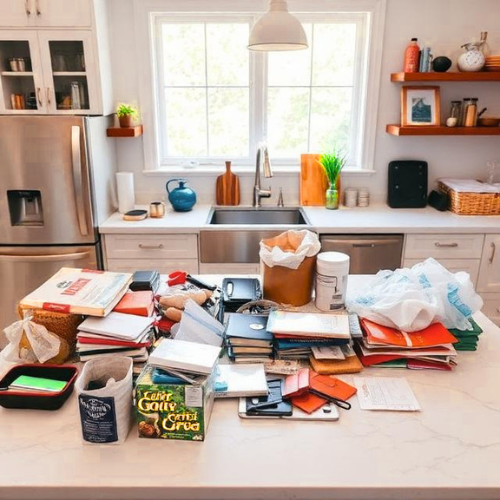
Step 1: Empty and Declutter Every Cabinet
Before you buy a single bin or organizer, pull everything out.
Yes, everything.
Spread it all on your kitchen table or counter. Now go through it honestly:
- Toss anything expired, broken, or chipped
- Donate items you haven’t used in 6+ months
- Relocate anything that doesn’t belong in the kitchen (why is there a screwdriver in here?)
- Keep only what earns its place
This step is uncomfortable for most people — and also the most important. You cannot organize clutter. You can only move it around.
Real-talk tip: If you have more than two of the same item (three spatulas, four sets of measuring cups), keep your favorite and donate the rest.
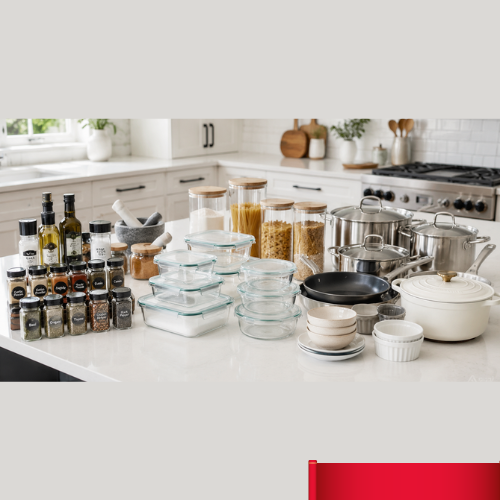
Step 2: Group Similar Items Together
Once you know what you’re keeping, sort everything into categories before it goes back into any cabinet.
Common categories:
- Pots and pans
- Baking supplies
- Food storage containers
- Spices and seasonings
- Snacks and dry goods
- Dinnerware and glasses
- Cleaning supplies
- Small appliances and tools
Grouping first prevents the classic mistake of randomly putting things back “wherever they fit” — which is exactly how the chaos started in the first place.
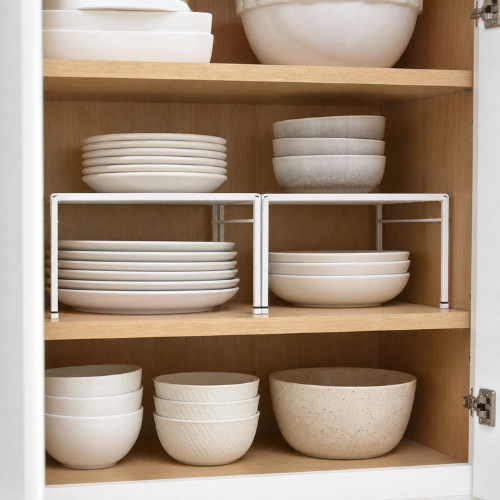
Step 3: Think Vertically and Strategically
Before anything goes back in, think about placement logic.
The general rule of thumb:
- Daily-use items → lower cabinets, front of shelves, easy reach
- Weekly-use items → middle shelves, slightly less accessible
- Rarely used items → top shelves or back corners
Also think vertically. Most cabinet shelves leave a huge gap between items and the shelf above. Stackable shelf risers or under-shelf baskets instantly double your usable space without adding any new cabinets.
Pro tip: Keep heavy items low, light items high. This isn’t just organization — it’s safety.
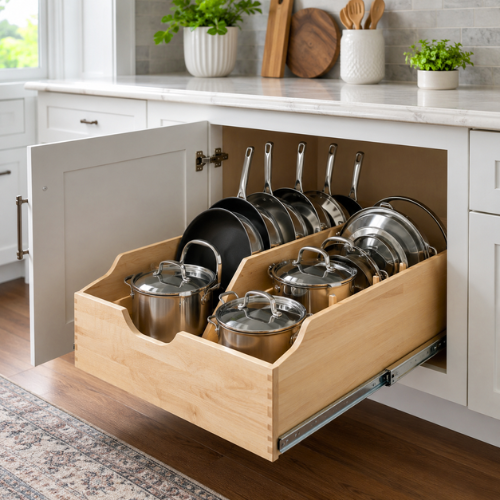
Step 4: Add Cabinet Organizers and Storage Solutions
Now — now — you can go shopping. But shop with measurements and a category list in hand so you buy exactly what you need.
The most impactful cabinet organizers to consider:
- Pull-out drawer inserts for lower cabinets
- Lazy Susans for corner cabinets and deep shelves
- Door-mounted organizers for spices, lids, or foil/wrap
- Under-shelf baskets to create a second level on any shelf
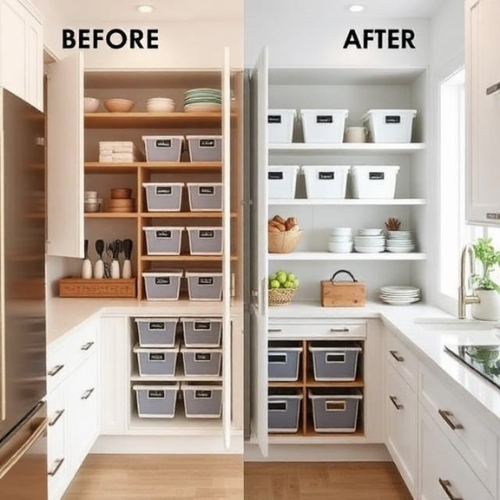
- Clear bins and containers for pantry cabinets
- Stackable shelves for dishes and mugs
Buy based on what you’ve decided to store — not based on what looks pretty on Amazon.
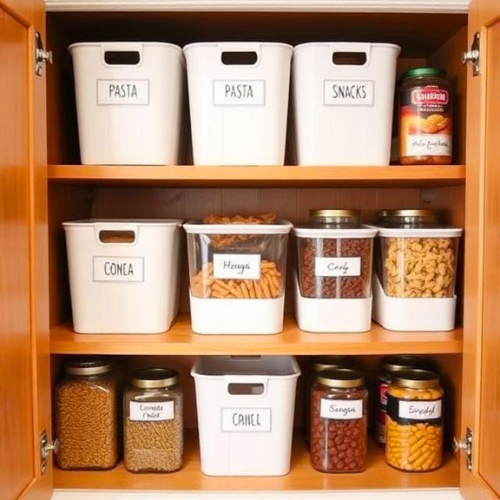
Step 5: Label Clearly and Consistently
Labels aren’t just for Type-A personalities. They’re the reason an organized system stays organized.
When every bin, basket, and shelf zone is labeled:
- Everyone in the household knows where things go
- Items actually get put back in the right place
- You stop doing the “Wait, where does this go?” shuffle
For a clean look, use a label maker (the DYMO is a classic for a reason), printable labels, or chalk markers on chalkboard labels.
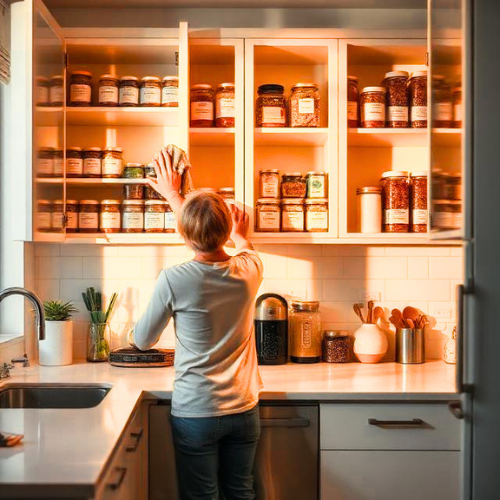
Step 6: Maintain It Weekly (This Is the Secret)
The most organized kitchen in the world falls apart without a simple maintenance habit.
The 10-minute weekly reset: Once a week — Sunday evenings work well for most families — do a quick sweep of every cabinet. Put misplaced items back. Wipe down any spills. Make sure everything is where it belongs.
It takes less time than one episode of a TV show. And it keeps you from ever facing that full-blown cabinet avalanche again.
Best Kitchen Cabinet Storage Ideas (That Actually Work)
Here’s where we get into the good stuff — specific kitchen cabinet storage ideas you can implement this weekend.
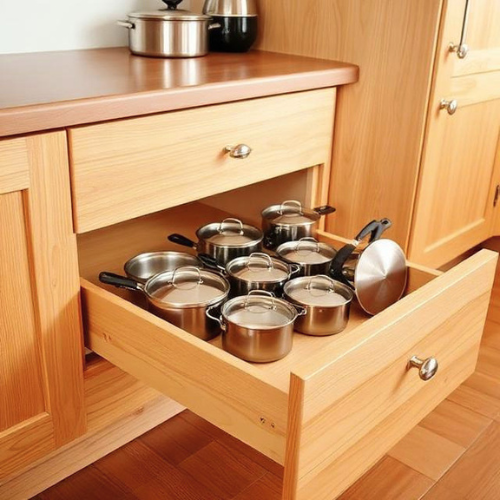
Pull-Out Drawers and Slide-Out Shelves
These are absolutely worth the investment for lower cabinets, especially for pots, pans, and heavy items. Instead of digging to the back of a deep cabinet, everything slides out to meet you.
You can find retrofitted pull-out shelves that fit inside existing cabinets for $30–$80 — no renovation required.
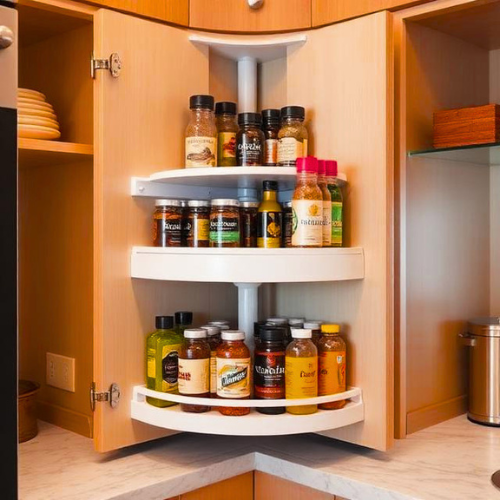
Lazy Susans (Rotating Turntables)
Corner cabinets are legendary black holes. A Lazy Susan solves this completely.
Use them for:
- Oils, vinegars, and condiments
- Spice collections
- Canned goods
- Baking supplies
Two-tier Lazy Susans double the capacity. They’re available on Amazon for as little as $15.
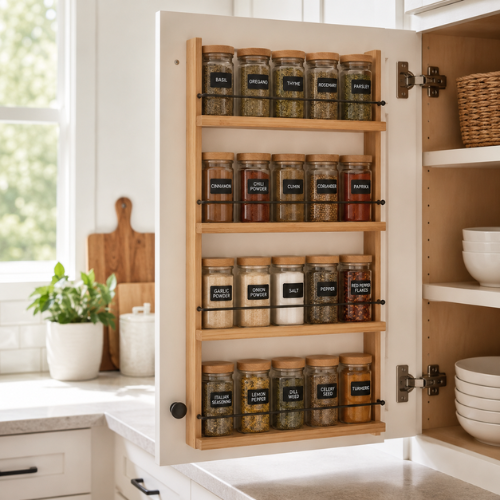
Door-Mounted Organizers
The inside of your cabinet doors is free storage waiting to happen.
Over-door organizers can hold the following:
- Spices (keep them right where you cook)
- Pot lids (notoriously difficult to store any other way)
- Foil, plastic wrap, and parchment paper
- Cleaning supplies
- Cutting boards
For renters, adhesive-mounted options mean no screws are required.
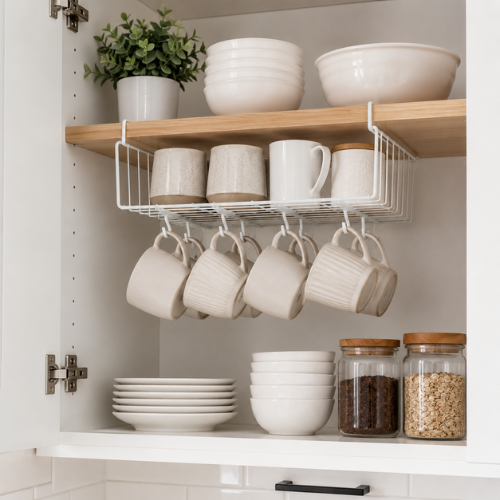
Under-Shelf Baskets
These are criminally underrated. An under-shelf basket clips onto any existing shelf and instantly creates a second storage level.
Use them for:
- Mugs (hang them under a shelf)
- Snack packets
- Cutting boards (stored vertically under a shelf)
- Foil and wrap boxes
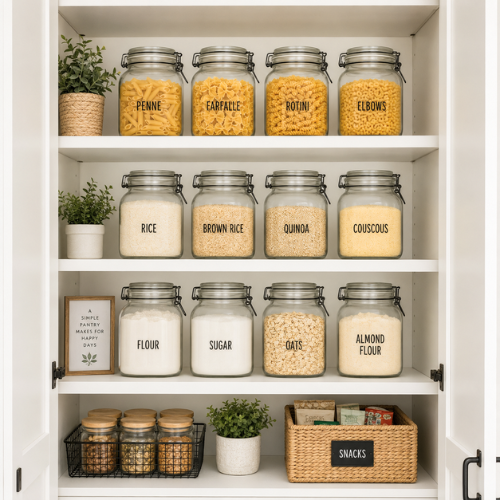
Clear Storage Containers for Pantry Cabinets
Transferring dry goods into clear, airtight containers is one of those changes that seems fussy until you do it — and then you can never go back.
Benefits:
- Get a clear view of everything you own in one quick glance
- Keep food fresher longer
- Eliminate bulky packaging
- Create a uniform, visually calm pantry
Recommended brands: OXO, Rubbermaid Brilliance, IKEA KORKEN, or Amazon Basics budget-friendly.
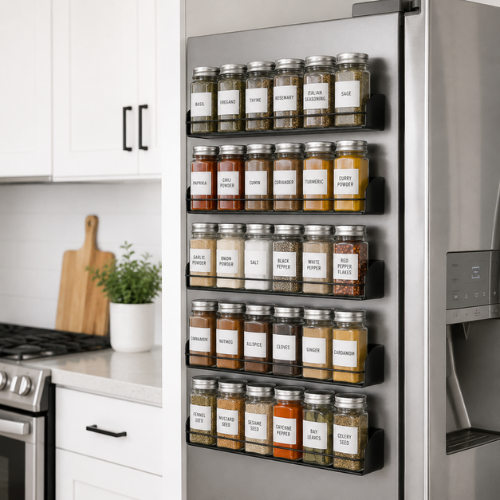
Spice Rack Solutions
Spices deserve their own strategy. Shoved in a drawer or crammed in a cabinet, they get lost, expire, and frustrate you every single time you cook.
Options ranked by space impact:
- Magnetic fridge-mounted rack — keeps spices visible, off shelves entirely
- Cabinet door spice organizer — right where you need them
- Tiered spice shelf riser inside a cabinet — lets you see every jar
- Drawer spice insert — flat-label-up organization
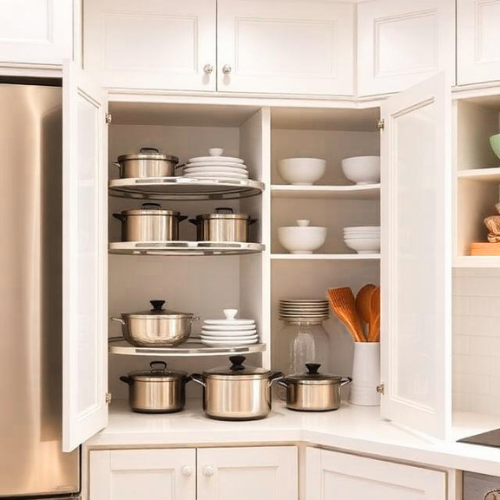
Corner Cabinet Organizers
Beyond the Lazy Susan, D-shaped corner shelves and swing-out cabinet systems can make corner storage genuinely functional.
Blind corner pull-out organizers — the kind that swing out when you open the door — are the gold standard for corner cabinet storage. They’re pricier ($80–$150) but transform a frustrating space into highly usable storage.
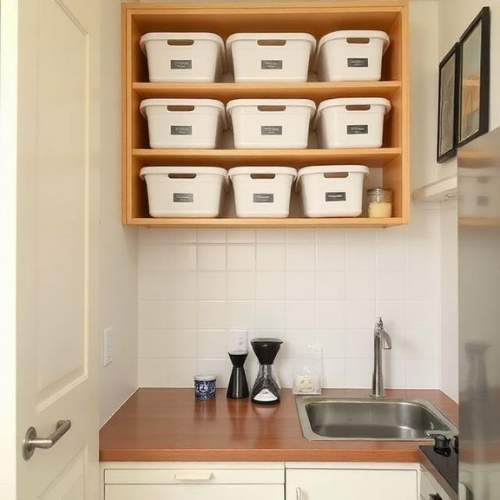
Small Kitchen Cabinet Organization Ideas
If your kitchen is on the smaller side, you have to be smarter — not just tidier.
Go Vertical at Every Opportunity
Install a floating shelf above existing upper cabinets for rarely-used items. Stack mugs using a mug tree on a shelf. Use stackable bins that build upward rather than spreading outward.
Every inch counts, so every inch should be intentional.
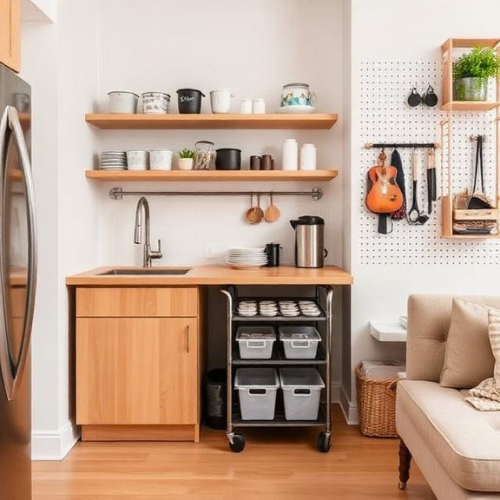
Use Multi-Purpose Organizers
In a small kitchen, every organizer needs to work double duty:
- A mobile kitchen cart creates extra counter space while giving you more room to store essentials.
- An over-sink shelf adds a level and a drying rack
- A magnetic knife strip clears a drawer and adds wall storage
- A pegboard organizes utensils and pots
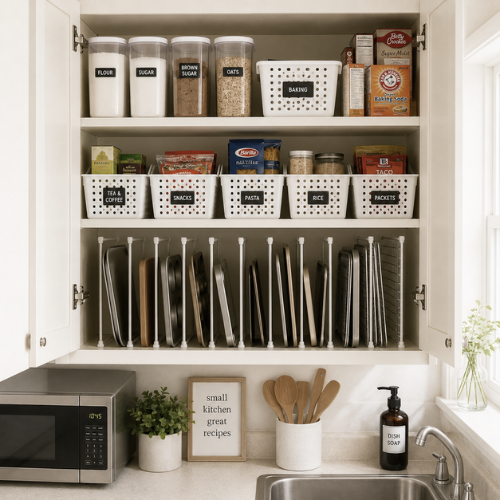
Budget-Friendly Small Kitchen Hacks
- Tension rods inside cabinets create vertical dividers for baking sheets and lids
- Command strips mount organizers without drilling — great for renters
- Dollar store bins work just as well as expensive ones when properly sized
- Mason jars store dry goods cheaply and look great on open shelves
- Repurpose magazine files as vertical pan and lid organizers
Kitchen Cabinet Organization by Category
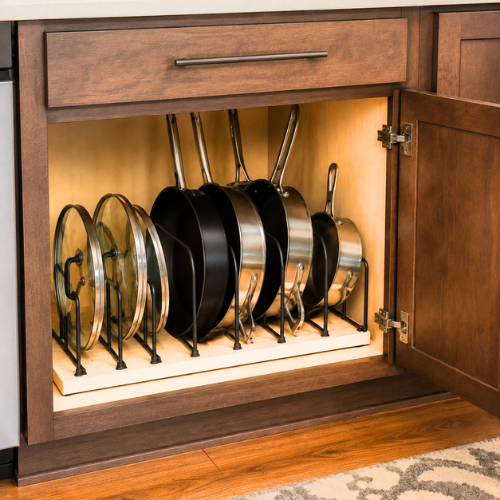
Pots and Pans
Store nested by size in a lower cabinet. Use a pan organizer rack (vertical dividers) so you can grab one without unstacking everything. Lids go on a door-mounted lid organizer or a tension rod rack.
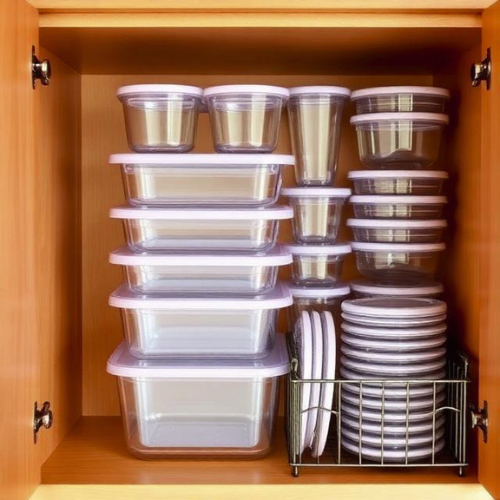
Food Storage Containers
This category alone causes 90% of cabinet chaos. The fix: keep only matched sets. If a container doesn’t have a lid, toss it. Store lids separately in a door-mounted rack or a small bin. Nest containers by size inside one another.
Baking Supplies
Group all baking items in one zone — ideally a lower cabinet near your counter workspace. Use a large clear bin to corral smaller items (vanilla, baking soda, chocolate chips) so you can pull the whole bin out when you bake.
Cleaning Products
Keep under the sink, in a handled caddy. This makes it easy to grab and carry, and keeps harsh chemicals contained and away from food.
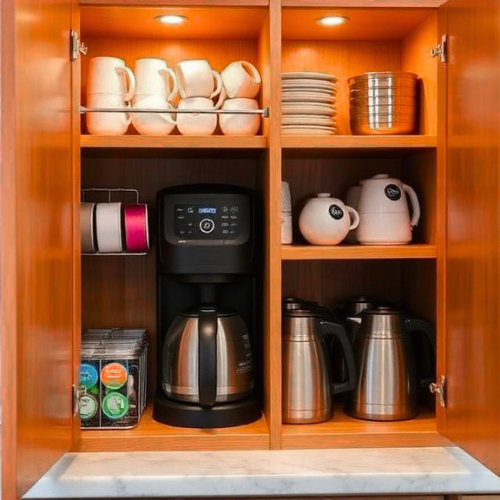
Coffee Station
Dedicate one cabinet — upper or lower — to everything coffee: mugs, pods, beans, filters, sugar, creamer. Add a small tray or lazy susan so everything spins to the front easily.
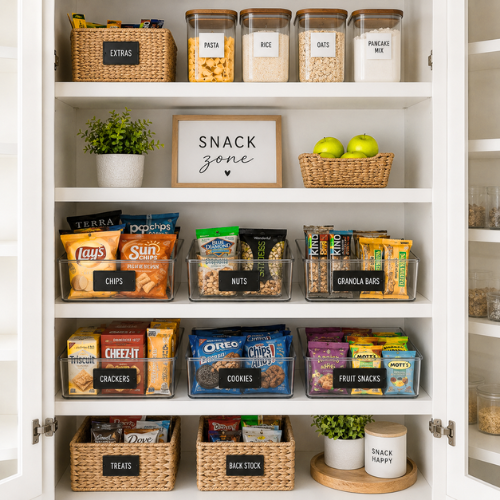
Snacks and Dry Goods
Use clear labeled bins grouped by type: kids’ snacks, nuts and seeds, chips and crackers, granola bars. This prevents the bottomless snack cabinet where chips expire at the back and nobody knows what you have.
Common Kitchen Cabinet Organization Mistakes
Even people who try to get organized fall into these traps:
Overstuffing shelves. An organized shelf is at 75–80% capacity. Beyond that, things fall and nothing stays neat. If it barely fits, something needs to go.
Buying organizers before measuring. The number of people who buy a gorgeous bin only to find it’s 2 inches too tall for their cabinet… It’s heartbreaking. Always measure first.
Ignoring vertical space. This is the biggest missed opportunity in most kitchens. Shelf risers, under-shelf baskets, and stacking containers are the answer.
Keeping unused gadgets. That mandoline you used once in 2019 is taking up space that your actual everyday items need. If you haven’t used it in the last six months, it’s time to let it go.
Organizing without grouping. Putting things back in a tidier way but still mixing categories means you’ll be digging through the cabinet every time. Zones matter.
Skipping the maintenance habit. Organization isn’t a one-time event. Without a weekly reset, even the most perfectly organized cabinet slowly drifts back to chaos.
Budget-Friendly Cabinet Storage Ideas
Great organization doesn’t have to cost a lot. Here’s a breakdown:
Item | Budget Option | Price Range |
Shelf risers | Amazon Basics, IKEA | $10–$20 |
Clear bins | Dollar Tree | $3–$5 each |
Lazy Susan | Amazon | $12–$20 |
Drawer dividers | Bamboo expandable | $10–$15 |
Door-mounted rack | Command strip version | $8–$15 |
Can organizer | Dollar store | $15–$35 |
Tension rods | Hardware store | $9–$36 |
Label maker | DYMO LetraTag | $25–$30 |
DIY moves that cost almost nothing:
- Use old shoeboxes as cabinet dividers temporarily
- Repurpose cereal boxes as pantry organizers
- Use a file organizer from your desk as a lid rack
- Stack magazine holders for baking sheets
FAQ: Kitchen Cabinet Organization Questions Answered
How can I organize kitchen cabinets when I have very limited space?
Start by decluttering — remove everything you don’t use regularly. Then focus on vertical space with shelf risers and under-shelf baskets. Use door-mounted organizers to add storage without taking up shelf space at all.
What are the best cabinet organizers for small kitchens?
The most impactful ones are stackable shelf risers, Lazy Susans for deep or corner cabinets, door-mounted spice racks, clearly labelled bins for the pantry, and under-shelf wire baskets.
How do I keep kitchen cabinets organized long-term?
The weekly 10-minute reset is the secret. Spend a few minutes each week putting things back where they belong and wiping down shelves. Also, adopt the one-in-one-out rule: when something new comes in, something goes out.
What should I get rid of when I declutter kitchen cabinets?
Expired food and spices, duplicate tools, broken or chipped dishes, containers without lids, and any appliance or gadget you haven’t used in 6 months. Be honest — if you forgot you owned it, you don’t need it.
Are expensive cabinet organizers worth it?
Not necessarily. Budget-friendly organizers from Amazon, IKEA, and even dollar stores often perform just as well as high-end brands for most needs. Spend more on pull-out drawer systems and corner cabinet solutions where the quality genuinely makes a functional difference.
Frequently Asked Questions
Q. How often should I reorganize my kitchen cabinets?
A. Once your system is set up, you shouldn’t need a full reorganization more than once or twice a year.
The weekly 10-minute reset keeps everything on track — full reorganization is only needed if your household size, cooking habits, or kitchen layout changes significantly.
Q. Do I need to buy new cabinet organizers, or can I use what I already have?
A. You can absolutely start with what you have — shoeboxes, mason jars, and old containers work fine as temporary dividers.
Only invest in dedicated organizers once you know exactly what categories and quantities you’re storing.
Q. What's the best order to organize a kitchen — cabinets first or drawers first?
A. Cabinets first is usually easier since they hold bulkier items and free up the most visual chaos quickly.
Drawers can follow once you’ve established your storage zones, since drawer organization often depends on what ended up in nearby cabinets.
Q. How do I organize kitchen cabinets in a rental where I can't drill holes?
A. Stick to Command-Strip-mounted organizers, adhesive door racks, tension rods, and freestanding shelf risers — none require drilling. Lazy Susans, under-shelf baskets, and clear bins are also fully removable and rental-friendly.
Q. Should pots and pans go in upper or lower cabinets?
A. Lower cabinets, always. Pots and pans are heavy, so keeping them low reduces strain and injury risk, and it’s also the more ergonomic spot near your stove for daily cooking access.
Q. How do I stop my cabinets from getting messy again after organizing them?
A. The one-in-one-out rule and the weekly 10-minute reset are the two habits that actually prevent drift back to clutter. Skipping either one is the most common reason organized cabinets fall apart within a few months.
Q. What size shelf risers work best for most kitchen cabinets?
A. Most standard cabinets fit shelf risers in the 5–7 inch height range, which comfortably fits plates or bowls underneath while leaving room for a second layer above. Measure your tallest lower-shelf item first, since risers that are too short defeat the purpose.
Conclusion: Your Cabinets Can Work For You
Here’s what I want you to walk away knowing: organized kitchen cabinets aren’t a luxury or a Pinterest fantasy. They’re completely achievable — in any kitchen, at any budget, at any size.
You don’t have to do it all in one weekend. Start with one cabinet. The one that frustrates you most. Empty it, declutter it, group what’s left, and put it back with intention.
That one win will make you want to do the next one. And the next.
Before long, you’ll open every cabinet in your kitchen and find exactly what you need, exactly where you left it. Cooking feels easier. Mornings feel calmer. Your kitchen feels like a place that actually works for you.
Related Articles