
Best Homemade Tile Floor Cleaning Solution
The Best Homemade Tile Floor Cleaning Solution for Shiny, Residue-Free Floors (That Actually Works)
Introduction
You mop the kitchen floor, step back, and expect to see clean, gleaming tile. Instead, you get a dull, slightly sticky surface that somehow looks worse than before. Sound familiar? You’re not alone.
Millions of American homeowners deal with this exact frustration — and the culprit is usually the cleaner they’re using, not a dirty floor.
The reality is that most commercial tile floor cleaners leave behind a thin layer of soap residue. That residue attracts more dirt, dulls the finish over time, and keeps you mopping in circles. The fix is simpler — and a lot cheaper — than anything you’ll find at a big-box store.
Homemade tile floor cleaning solutions work. Real ones, made from ingredients already in your pantry, can clean ceramic and porcelain tile without residue, strip grease from kitchen floors, and brighten grout lines naturally.
This guide covers every recipe, every trick, and every mistake to avoid — so you stop wasting money on cleaners that don’t deliver.
Why Homemade Solutions Beat Store-Bought Cleaners
Walk down any cleaning aisle and you’ll find dozens of tile floor products promising “deep clean” and “streak-free shine.” Most of them contain surfactants — the soapy agents that foam up and trap dirt.
The problem is rinsing. Unless you’re following your mop with a second clean-water pass (most people aren’t), that soap stays on the tile.
Over time, it builds up. The floor starts looking hazy, almost cloudy. It feels slightly tacky underfoot. And every time you mop again, you’re adding more residue on top of old residue.
Homemade tile floor cleaners solve this because the best DIY recipes use pH-neutral or mildly acidic bases — like white vinegar or rubbing alcohol — that rinse completely clean. No residue, no film, no build-up.
There’s also the cost factor. A bottle of commercial tile cleaner runs $8–$15. A gallon of white vinegar costs around $3 and can make many batches. For budget-conscious families, this math matters.
The Best Homemade Tile Floor Cleaning Solution (Core Recipe)
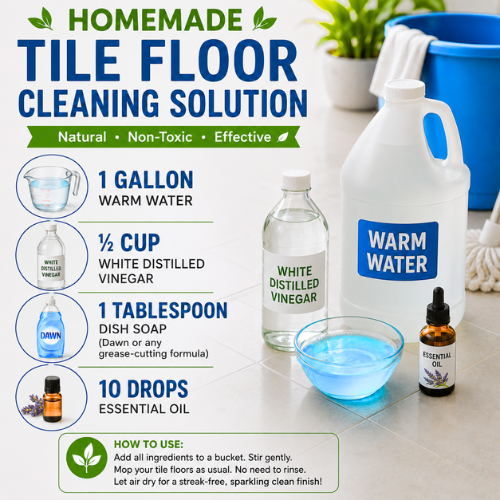
This is the recipe that works on most tile floors — ceramic, porcelain, and glazed stone — and leaves no residue behind.
All-Purpose DIY Tile Floor Cleaner
What You Need:
- 1 gallon warm water
- ½ cup white distilled vinegar
- 1 tablespoon dish soap (Dawn or any grease-cutting formula)
- 10 drops essential oil (optional — lemon or tea tree for scent and added antibacterial action)
How to Mix It: Add the vinegar to the water first, then add the dish soap slowly to prevent excessive foaming. Add essential oils last. Mix gently before mopping.
Why It Works: The vinegar provides mild acidity that cuts through soap scum and mineral deposits. The dish soap lifts grease and surface grime. Together, they clean effectively without leaving behind the cloudy residue that commercial multi-surface cleaners often cause.
Pro tip: Warm water works better than hot water. Hot water can cause some tile grouts to expand slightly over time, and it also causes the vinegar smell to intensify during mopping.
DIY Tile Cleaner Recipes by Floor Type step by step
Ceramic Tile Cleaner
Ceramic tile is glazed and relatively forgiving. It handles vinegar well and can tolerate slightly stronger solutions.
Recipe:
- 1 gallon warm water
- ½ cup white vinegar
- 2 tablespoons dish soap
Good for high-traffic areas like entryways and hallways. For everyday maintenance, just use warm water with a splash of vinegar.
Porcelain Tile Cleaner
Porcelain is denser than ceramic and much less porous — which is why it stains less but can also look duller if the wrong cleaner is used.
Recipe:
- 1 gallon warm water
- ¼ cup white vinegar
- 1 tablespoon rubbing alcohol (70%)
- 5 drops dish soap
The rubbing alcohol evaporates quickly, which helps prevent streaks on polished porcelain. This is one of the best combinations for bathroom floors where polished tile shows every smear.
Note: If your porcelain tile is unglazed or matte-finish, skip the vinegar entirely. Use only a mild dish soap mixed with warm water. Unglazed porcelain is more porous and acidic cleaners can slowly etch it.
Kitchen Tile Floor Cleaner
Kitchen floors deal with grease. Cooking splatter, oily shoes, and stove drips—all of it ends up settling into the tile. For this, you need something with real degreasing power.
Degreasing Kitchen Tile Recipe:
- 1 gallon hot water
- 2 tablespoons dish soap (Dawn works best here)
- ¼ cup white vinegar
- 1 tablespoon baking soda (add after mixing, it will fizz briefly)
The fizz from the vinegar and baking soda reaction is mild but helps lift stubborn grease from textured surfaces. For heavily soiled kitchen floors, let the solution sit for 2–3 minutes before mopping up.
Bathroom Tile Cleaner
Bathroom tile battles soap scum, hard water, and humidity. The solution needs to address mineral deposits without damaging grout.
Bathroom Tile Cleaner Recipe:
- 1 gallon warm water
- ½ cup white vinegar
- ¼ cup hydrogen peroxide (3%)
- 5 drops tea tree essential oil
The hydrogen peroxide provides mild disinfecting action — useful in a bathroom — without the harshness of bleach. Tea tree oil adds natural antimicrobial properties and helps with mildew odor.
Avoid using this recipe on colored grout. Hydrogen peroxide can fade grout sealant and lighter grout colors over time.
Vinegar vs. Dish Soap vs. Baking Soda: Which Wins?
Each of the three common DIY tile cleaning ingredients serves a different purpose:
White Vinegar Best for: Dissolving mineral deposits, hard water stains, soap scum pH: ~2.5 (acidic)
Avoid on: Natural stone (marble, travertine), unglazed tiles, unsealed grout
Dish Soap Best for: Cutting grease and lifting surface grime pH: ~7–8 (neutral to mildly alkaline)
Caution: Use sparingly — even a little too much causes residue
Baking Soda Best for: Light abrasive scrubbing, deodorizing, stain treatment pH: ~8.3 (mildly alkaline)
Best used: As a paste or spot treatment, not in large-batch mop solutions For general floor cleaning, vinegar wins for most situations. For grease-heavy floors, dish soap pulls ahead. For scrubbing grout or spot-treating stains, baking soda is your go-to.
Ingredients to Never Use on Tile Floors
Some things seem like they’d make good cleaners but can permanently damage your tile or grout:
- Bleach (undiluted): Can damage grout over time and create fumes in poorly ventilated spaces
- Ammonia-based cleaners: Strip sealers and discolor grout
- Straight vinegar (undiluted): Too acidic for regular use; safe only when diluted
- Steel wool or abrasive scrubbers: Scratch glazed tile surfaces
- Oil-based cleaners: Leave slippery residue
- Murphy’s Oil Soap on tile: Great for wood, terrible for tile — leaves a film that’s hard to remove
Many homeowners grab whatever cleaner is under the sink, and that’s how damage happens. Always check whether a product is rated for your tile type before using it.
How to Clean Grout Naturally
Grout is porous and it stains easily. The good news is you don’t need anything fancy to clean it.
Homemade Grout Cleaner Paste
What You Need:
- 3 tablespoons baking soda
- 1 tablespoon hydrogen peroxide
- 1 teaspoon dish soap
How to Use It:
Mix into a thick paste. Apply directly to grout lines using an old toothbrush or a stiff-bristled grout brush. Scrub in short, firm strokes. Let it sit for 5 minutes, then rinse with warm water.
For heavily stained grout, apply the paste and cover it with plastic wrap to keep it moist. Let it sit for 20–30 minutes, then scrub thoroughly.
Maintenance tip: Once your grout is clean, apply a grout sealer every 12–18 months. This prevents staining and dramatically cuts your cleaning time going forward.
How to Make Tile Floors Shiny Without Wax
One of the biggest reasons tile floors look dull is soap residue build-up — not dirty grout or worn tile.
Stripping that residue is the first step.
- Shine-Restoring Rinse:
- 1 gallon warm water
- ½ cup white vinegar
- ½ cup rubbing alcohol
Mop with this solution and don’t rinse. The alcohol evaporates fast and leaves no streaks. The vinegar neutralizes soap residue. After one or two applications, most tile floors look noticeably cleaner and brighter.
For routine maintenance, a dry microfiber mop after wet mopping removes remaining moisture and prevents water spots — one of the most underrated tips for shiny tile.
Never use wax on tile floors. Unlike hardwood, glazed tile doesn’t absorb wax. It stays on the surface, collects dirt, and eventually turns into a yellowed mess.
Pet-Safe and Child-Safe Cleaning Recipes
If you have crawling babies or dogs who lick the floor (it happens), you want a solution that’s genuinely non-toxic after it dries.
Basic Pet-Safe Floor Cleaner
- 1 gallon warm water
- ¼ cup white vinegar
- 5 drops lemon essential oil
Once the floor dries, it’s completely safe. Vinegar is non-toxic and the faint smell dissipates within minutes of air-drying.
Child-Safe Disinfecting Cleaner
- 1 gallon warm water
- ¼ cup hydrogen peroxide (3%)
- 1 tablespoon dish soap
Hydrogen peroxide breaks down into water and oxygen after use, making it one of the safest disinfectants for homes with kids. Do not mix with vinegar — the combination creates peracetic acid, which may irritate the airways.
Best Mops and Tools for Tile Floors
The right tool makes a real difference. Here’s what works:
Microfiber Flat Mop: The best choice for most tile floors. It lifts and traps dirt instead of spreading it around, uses less solution, and dries fast to help prevent water spots.
Steam Mop: Excellent for sanitizing and cutting through grease without any chemicals. Not recommended for unsealed grout — steam can loosen the grout over time.
String Mop: Holds more solution but tends to over-wet floors, which increases drying time and can seep into grout joints.
Grout Brush or Old Toothbrush: Essential for grout cleaning. Stiff nylon bristles, not metal.
Squeegee: Surprisingly effective on bathroom tile floors — pull excess water toward a drain to dramatically speed drying.
Avoid using paper towels or regular cotton rags for tile floor cleaning. They don’t trap fine particles — they just redistribute them.
How to Remove Grease, Stains, and Hard Water Spots
Grease Removal
Apply a small amount of undiluted dish soap directly to the grease spot. Let sit 5 minutes. Scrub with a nylon brush, then mop clean. For stubborn grease buildup around stoves, apply a baking soda paste and leave it for 15 minutes before wiping it off.
Sticky Residue
Warm water and dish soap works for most sticky spots. For adhesive residue (from stickers, tape, or floor mats), a few drops of rubbing alcohol on a cloth breaks it down quickly.
Hard Water Stains
White vinegar is your best friend here. Soak a cloth in undiluted white vinegar, lay it directly over the hard water spot, and let it sit for 10–15 minutes. The mineral deposits will dissolve when you scrub. For heavy calcium build-up, repeat the process twice.
Cloudy Tile Floors
This is almost always soap residue. Use the shine-restoring rinse from Section 7. After two or three applications on separate cleaning days, the haze typically clears completely.
How Often Should You Clean Tile Floors?
Here’s a practical schedule that works for most households:
- Daily: Quick dry sweep or robot vacuum to remove grit (grit scratches tile over time)
- Weekly: Wet mopping with your DIY cleaner of choice
- Monthly: Spot-clean grout lines; check for developing stains
- Every 6 months: Deep clean grout with baking soda paste; check grout for cracking or gaps
- Every 12–18 months: Reseal grout to maintain stain resistance
Homes with pets, kids, or heavy foot traffic benefit from twice-weekly wet mopping. Kitchens should ideally be mopped after any cooking session involving oil or grease.
Common Tile Cleaning Mistakes Homeowners Make
Using too much soap. Even a small excess of dish soap leaves a residue. Less is always more with tile floor cleaners.
Not sweeping before mopping. Wet mopping over a dusty floor turns dirt into muddy smears. Always dry clean first.
Letting water sit. Standing water seeps into grout joints and weakens the bond over time. Always mop in small sections and dry as you go.
Ignoring grout sealing. Unsealed grout stains within weeks. It’s a 20-minute job that saves hours of scrubbing later.
Using the same mop water for the whole floor. Dirty mop water spreads what you’re trying to remove. Refresh your solution every 200–300 square feet.
Mixing cleaning agents randomly. Vinegar and hydrogen peroxide together create a mild acid. Bleach and ammonia create toxic fumes. Always know what you’re combining.
Professional cleaners often avoid bleach because it’s far more damaging to grout sealers than most people realize. A cleaner, well-maintained grout line beats a chemically-blasted one every time.
FAQ
What is the best homemade tile floor cleaning solution?
The most effective all-purpose homemade tile floor cleaner uses 1 gallon of warm water, ½ cup white vinegar, and 1 tablespoon dish soap. This combination cuts grease, removes residue, and leaves floors clean without a soapy film.
Can I clean tile floors with vinegar every week?
Yes — diluted white vinegar is safe for weekly use on glazed ceramic and porcelain tile. Avoid it on natural stone, unglazed tile, and unsealed grout, as prolonged acid exposure can slowly degrade those surfaces.
Is baking soda safe for cleaning tile floors?
Baking soda is safe for tile when used as a paste for spot treatment or grout scrubbing. Avoid using it in large amounts in mop water — it can leave a white film as it dries.
Is a vinegar tile floor cleaner safe for pets?
Yes. Once the floor dries, diluted vinegar residue is completely non-toxic for pets. The smell fades within minutes of air-drying. You can also add a few drops of pet-safe essential oil like lemon or lavender for a fresher scent.
How do I make tile floors shine without commercial polish?
Mix equal parts warm water, white vinegar, and rubbing alcohol. Mop with this solution and let it air-dry without rinsing. The alcohol evaporates quickly, leaving no streaks, and the vinegar neutralizes existing soap build-up.
What should I never use to clean tile floors?
Avoid undiluted bleach, ammonia-based cleaners, steel wool, oil-based soaps, abrasive powders, and wax on glazed tile. These either scratch the surface, strip grout sealers, or create build-up that dulls your floors over time.
Final Thoughts
Here’s the bottom line: you don’t need an expensive specialty product to keep your tile floors looking great.
The best homemade tile floor cleaning solution uses ingredients you already own — white vinegar, dish soap, and sometimes baking soda — and it outperforms most commercial options precisely because it doesn’t leave residue behind.
Start with the core all-purpose recipe. Adjust for your tile type. Add the grout cleaning paste to your monthly routine. And invest in a quality microfiber flat mop — it will change how you feel about mopping floors entirely.
Clean floors shouldn’t require a chemistry degree or a trip to the store. With a few simple ingredients and the right technique, your tile floors can look their best without the guesswork — or the markup.