13 Common Home Decor Clutter Items You Should Rethink
Written by Ibrahim Khalil – Authority at The HomeDecor Review ( Author Bio )
Introduction
There’s a moment we’ve all experienced.
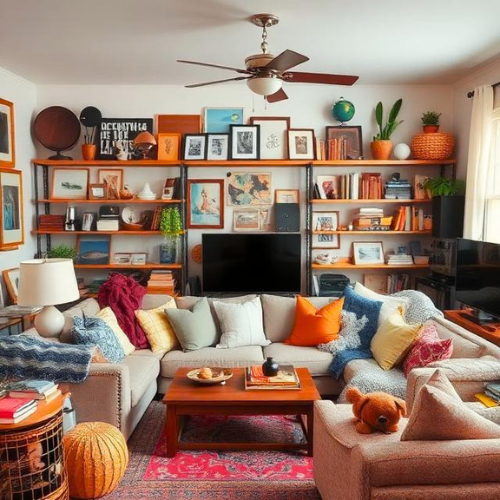
You walk into your home after a long day, hoping to relax—but instead of feeling calm, something feels… off. The space looks full, maybe even “decorated,” but not peaceful.
That’s the hidden problem.
It’s not always about having too little decor—it’s often about having too much of the wrong things. These common home decor clutter items slowly build up over time, quietly taking away the comfort your home should give you.
The good news? You don’t need a complete makeover. With a few intentional changes, you can declutter your home decor, create space, and bring back that calm, welcoming feeling.
Let’s walk through it—step by step.
Table of Contents
Introduction
Why Decor Clutter Feels
1. Too Many Throw Pillows
2. Overcrowded Wall Decor
3. Unused Decorative Items
4. Too Many Small Accessories
5. Excessive Seasonal Decor
6. Bulky Furniture in Small Spaces
7. Overfilled Shelves
8. Too Many Rugs
9. Fake Plants Everywhere
10. Cluttered Coffee Tables
11. Too Many Picture Frames
12. Unorganized Entryway Decor
13. Overdecorated Bedrooms
Final Thoughts
Frequently Asked Questions
Why Decor Clutter Feels So Overwhelming
Clutter isn’t just physical—it’s emotional.
When your home is filled with unnecessary decor:
- Your mind feels distracted
- Your space feels smaller
- Your home loses its personality
In many American homes today, especially smaller apartments, decor clutter happens without realizing it. A few extra pillows here, a couple of unused items there—and suddenly your space feels heavy.
The goal isn’t emptiness. It’s balanced.
1. Too Many Throw Pillows
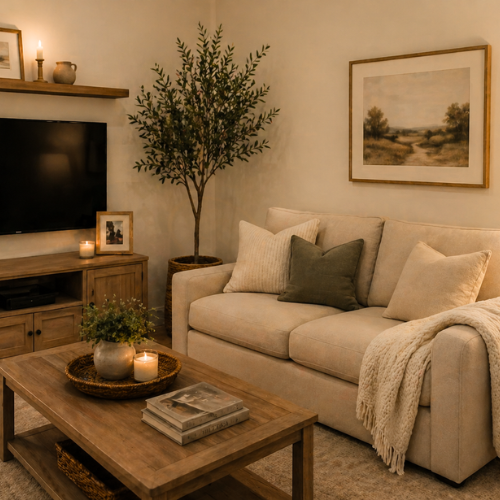
Throw pillows are one of the easiest ways to make a space feel cozy—but they can quickly become one of the most common home decor clutter items when overused.
What starts as an attempt to add softness often turns into a pile of cushions that no one actually enjoys.
In many American homes, especially those inspired by Pinterest or Instagram, sofas end up overloaded with pillows in different shapes, sizes, and patterns.
While it may look styled at first glance, in real life it creates inconvenience. You sit down and immediately have to move them. Over time, they lose their purpose and simply add visual noise.
A better approach is intentional styling. Choose two or three pillows that complement your colour palette and focus on texture—like linen pillow covers, cotton pillow covers, or soft knitted pillow covers. This keeps the cozy feel while maintaining balance.
👉 Subtle buying trigger: Instead of buying more pillows, upgrading to a few high-quality covers can instantly refresh your space.
2. Overcrowded Wall Decor
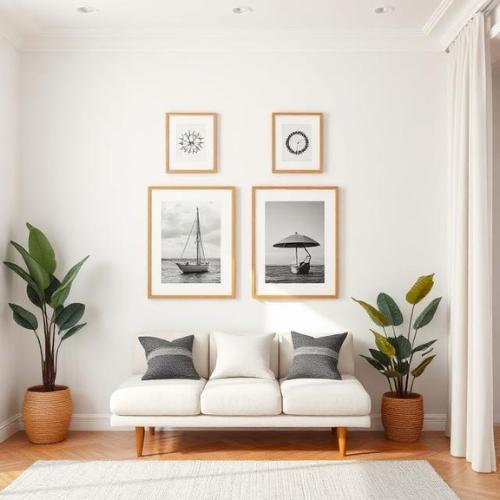
Walls are meant to guide the eye, not overwhelm it. One of the most overlooked home decor clutter ideas is filling every inch of wall space with frames, art, and decorations.
While gallery walls can be beautiful, too many pieces without proper spacing can make your home feel chaotic rather than curated.
When walls are overcrowded, your mind doesn’t know where to focus. Instead of appreciating individual pieces, everything blends into visual clutter.
This is especially noticeable in smaller homes or apartments, where wall space plays a big role in how open the room feels.
Try simplifying your layout. Choose a few meaningful pieces—art that resonates with you, photos that tell your story, or one statement mirror. Leave enough negative space around each item so it can stand out.
👉 Tip: Step back and view your wall from a distance. If it feels busy, it probably is.
3. Unused Decorative Items
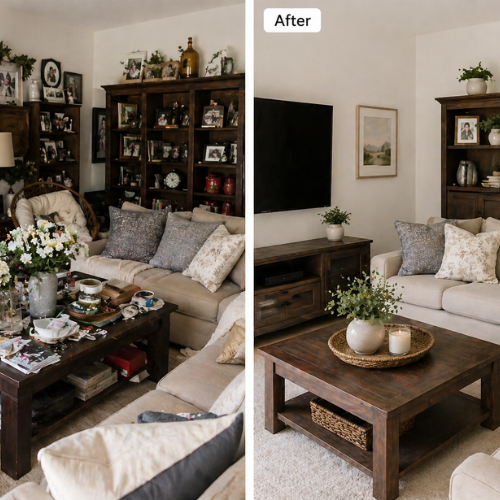
We’ve all bought something for our home that felt perfect at the moment—but later, it just sits there, unnoticed. These unused items are among the most common home decor clutter items because they accumulate silently over time.
Decorative trays, figurines, random accents, or impulse buys often lose their charm once the excitement fades. They don’t serve a purpose, and they don’t add emotional value anymore. Instead, they take up space—physically and visually.
Decluttering your home decor starts with honesty. Ask yourself: does this item add beauty, function, or meaning to my space? If the answer is no, it may be time to let it go.
Letting go doesn’t mean waste—you can donate, repurpose, or store items seasonally.
👉 Tip: Keep only decor that you truly notice and appreciate daily.
4. Too Many Small Accessories
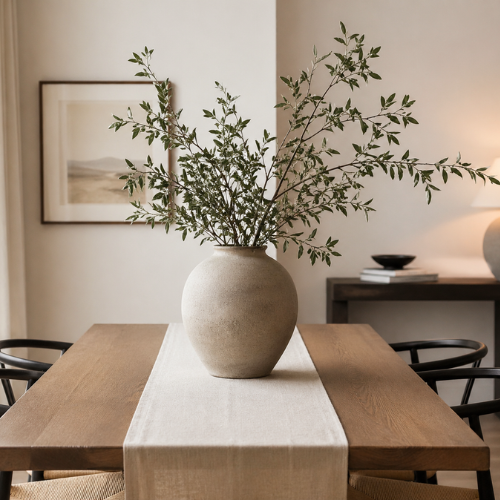
Small decor pieces can be charming—but when there are too many, they quickly turn into clutter. Items like tiny candles, mini vases, small figurines, and decorative trinkets often get scattered across surfaces, making the space feel crowded and disorganized.
The issue isn’t the items themselves—it’s the lack of visual hierarchy. When everything is small, nothing stands out. Your eyes move constantly without finding a focal point, which creates a subtle sense of chaos.
A smarter approach is to simplify and scale up. Instead of displaying five small items, try one larger statement piece. Or group similar items together intentionally to create a cohesive look.
👉 Subtle buying trigger: A single well-chosen statement decor piece can replace multiple smaller items and instantly elevate your space.
5. Excessive Seasonal Decor
Seasonal decorating is fun—it adds personality and keeps your home feeling fresh. But when seasonal items stay out all year, they become clutter rather than charm.
Holiday decor, themed accessories, and seasonal colors are meant to rotate. When everything is displayed at once or left out too long, it disrupts the natural flow of your space.
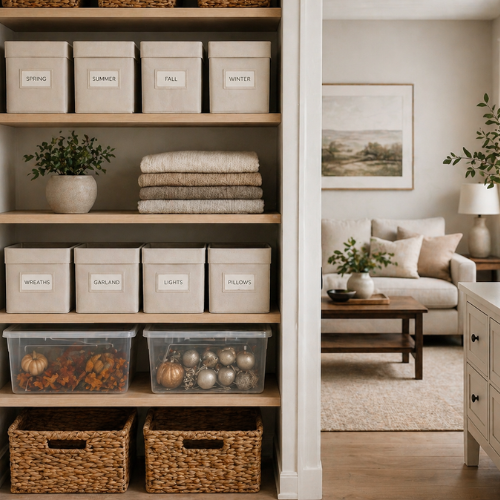
In many homes, storage becomes the issue. Without a system, people keep items out simply because there’s nowhere to put them.
The solution is simple: rotate intentionally. Store off-season decor and bring it out when the time feels right. This keeps your home feeling clean, relevant, and exciting throughout the year.
👉 Tip: Limit visible seasonal decor to a few key pieces.
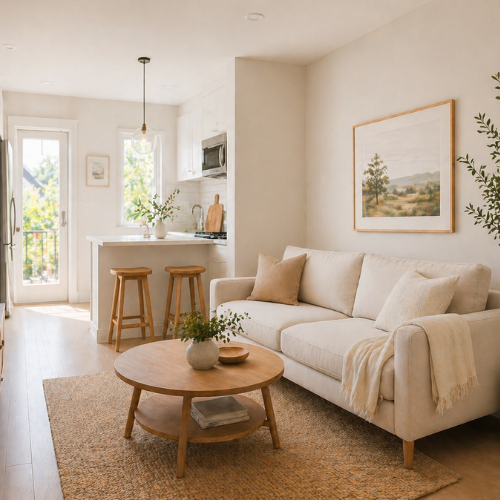
6. Bulky Furniture in Small Spaces
One of the biggest mistakes in home styling is choosing furniture that doesn’t match the scale of your space. Oversized sofas, large tables, or heavy cabinets can instantly make a room feel cramped.
This is especially important in apartments and smaller American homes, where every inch matters. Bulky furniture blocks movement, reduces light flow, and creates a sense of heaviness.
Instead, focus on proportion. Choose furniture that fits comfortably within your space and allows room to breathe. Multi-functional pieces—like storage ottomans or foldable tables—are especially useful.
👉 Subtle buying trigger: Space-saving furniture can dramatically improve both function and comfort.
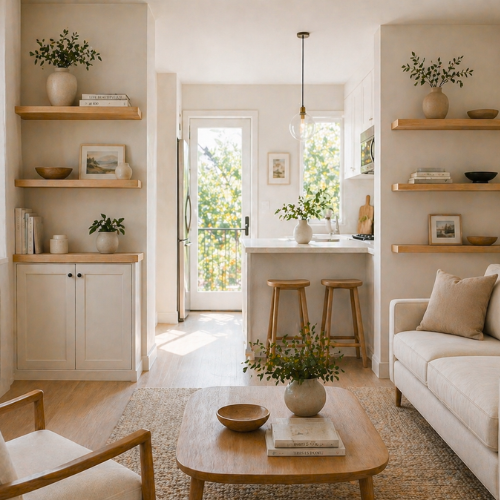
7. Overfilled Shelves
Shelves are meant to highlight—not hide—your decor. When they are packed with books, accessories, and random items, they lose their visual impact.
Overfilled shelves create a sense of chaos because there’s no breathing space. When every element demands attention, nothing truly captures it.
A better approach is intentional styling. Leave gaps between items. Mix books with decor. Use groups of three to create balance.
👉 Tip: Empty space is part of good design.
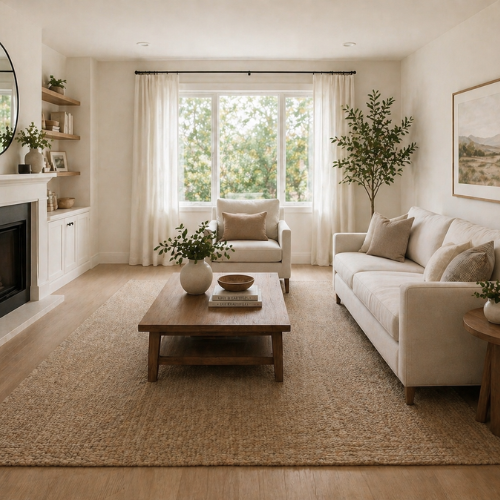
8. Too Many Rugs
Rugs add warmth and comfort, but too many can quietly break the visual flow of a room. What often starts as one accent rug in the living room slowly turns into overlapping layers in the entryway, kitchen, and bedroom—each with a different pattern competing for attention.
The problem isn’t rugs themselves—it’s when they stop anchoring a space and start fragmenting it.
Layering rugs can work beautifully in eclectic or bohemian styles, but without intention, it just reads as visual clutter underfoot.
A cleaner approach is choosing one well-sized rug per area that complements your furniture rather than competing with it.
Size matters more than most people realize—a rug that’s too small makes a room feel disjointed, while the right size ties the whole layout together.
👉 Subtle buying trigger: A properly sized area rug can instantly anchor a room better than three mismatched smaller ones.
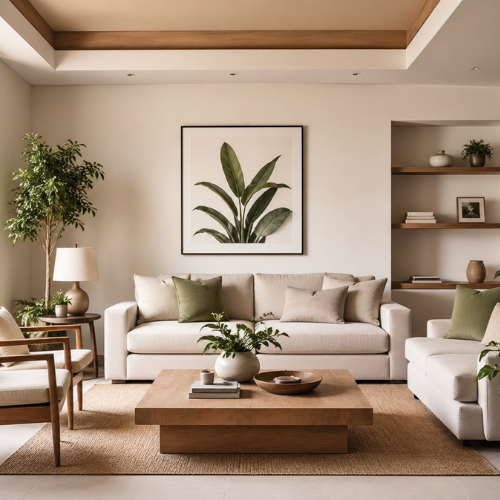
9. Fake Plants Everywhere
Artificial plants are convenient—no watering, no dying leaves—but when every corner, shelf, and windowsill has the same faux greenery, it starts to feel repetitive rather than refreshing.
The issue is texture monotony. When everything is uniform silk or plastic, a room loses the organic irregularity that real plants naturally bring, and guests notice the sameness even if they can’t name why.
A better balance is mixing in a few low-maintenance real plants—like pothos or snake plants—alongside your artificial ones. Reserve fake plants for spots with poor light where real plants would struggle, and keep real greenery where it can actually thrive.
👉 Subtle buying trigger: A single realistic artificial plant with textured leaves can replace three generic fake ones and look far more convincing.
10. Cluttered Coffee Tables
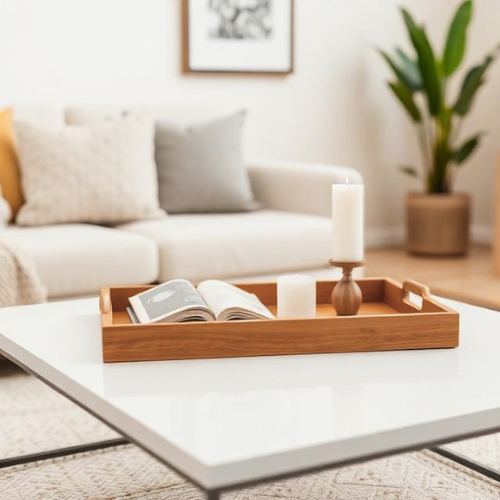
Coffee tables often become the default catch-all surface—remote controls, mail, half-read magazines, phone chargers, and random decor all pile up in one of the most visible spots in your home.
This matters more than people think, because the coffee table is usually at eye level when seated, meaning clutter here is impossible to ignore. It’s often the first thing guests notice when they sit down.
Keep the surface intentional: a tray to corral small items, one book, and a candle are usually enough. Anything beyond that should have a designated home elsewhere—a drawer, basket, or shelf.
👉 Subtle buying trigger: A simple decorative tray instantly makes scattered items look organized instead of messy.
11. Too Many Picture Frames
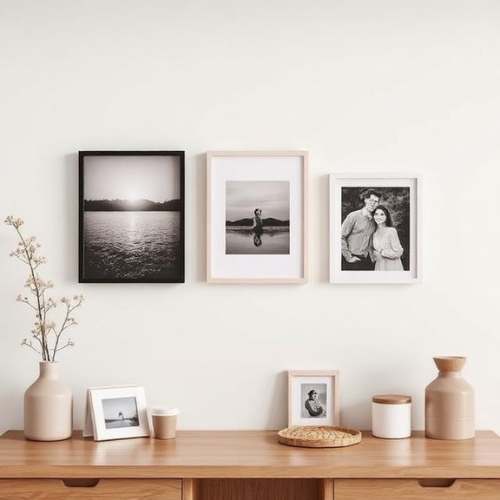
Photos are meaningful, but when every shelf and wall is covered in frames of every size and finish, the sentimental value gets lost in the visual noise. Instead of drawing the eye to cherished memories, it creates an overwhelming patchwork.
The fix isn’t removing personal touches—it’s curating them. Choose your favourite 5-8 photos and either commit to a matching frame set for cohesion or intentionally group varying sizes with consistent spacing.
👉 Tip: Rotate framed photos seasonally instead of displaying every photo you own at once—it keeps the display feeling fresh and meaningful.
12. Unorganized Entryway Decor
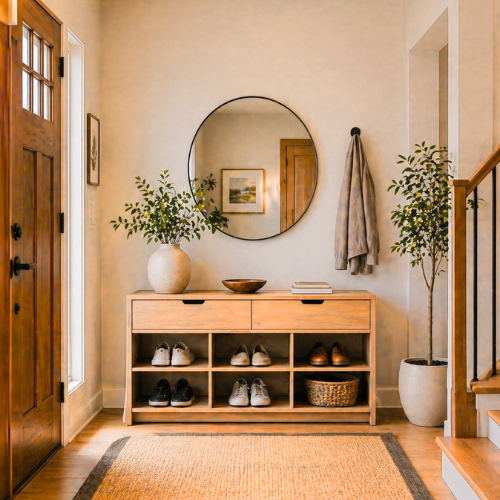
The entrance sets the tone for your entire home, yet it’s often the most neglected space. Shoes piled by the door, bags dropped on a bench, mail stacked on a console table—this is the first impression guests get, and it rarely feels intentional.
Because it’s a high-traffic transitional space, entryway clutter accumulates faster than anywhere else in the home—it’s where things get dropped “just for a second” and never move again.
A functional entryway needs designated spots: a shoe rack, a small basket for mail, and one hook system for bags and coats. Keep the surface clear enough that it still feels like a decor moment, not just a drop zone.
👉 Subtle buying trigger: A compact shoe rack or entryway organizer solves 90% of this clutter with one purchase.
13. Overdecorated Bedrooms
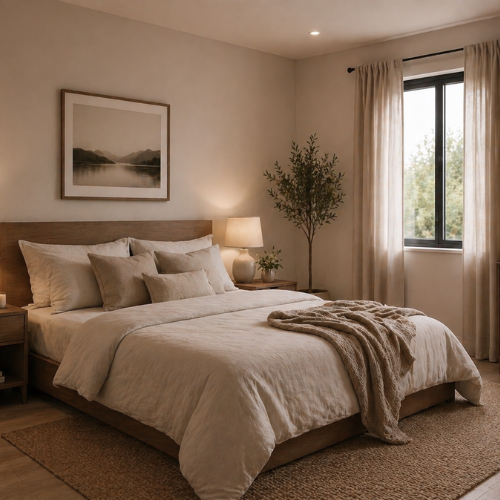
Bedrooms should feel restful, but they’re often where clutter is easiest to ignore since guests rarely see them.
Excess throw pillows, decorative objects on nightstands, and an overloaded dresser top can quietly work against the calm a bedroom is supposed to provide.
Sleep environments benefit from visual simplicity—fewer objects competing for attention at night and in the morning makes the room feel like an actual retreat rather than another decorated showroom.
Limit bedside tables to a lamp and one or two everyday essentials. Limit decorative pillows to what you’ll realistically remove and replace each night without frustration.
👉 Tip: If a bedroom item doesn’t support rest, it’s probably clutter.
Final Thoughts
Decluttering your home decor isn’t about stripping your space down to nothing—it’s about being intentional with what stays. E
ach of these 13 items isn’t inherently bad; the problem starts when quantity replaces purpose.
Start small. Pick just one category from this list—maybe your coffee table or your throw pillows—and declutter that first. Once you feel the difference in that one spot, the rest becomes much easier to tackle.
A calmer home doesn’t happen overnight, but it starts with noticing what’s quietly weighing your space down.
Frequently Asked Questions
Q. What is considered home decor clutter?
A. Home decor clutter refers to decorative items that no longer add beauty, function, or meaning to a space—things like excess throw pillows, unused decorative pieces, or overcrowded wall art that accumulate over time without intentional purpose.
Q. When do throw pillows become too many?
A. For most sofas, two to three well-chosen pillows are enough to add comfort without overwhelming the seating area. More than that often creates visual clutter rather than coziness.
Q. How often should I rotate seasonal decor?
A. Seasonal decor works best when limited to a few key pieces and rotated in and out with the season, rather than left out year-round, which helps your home feel fresh and intentional.
Q. Is it okay to use fake plants in home decor?
A. Yes, artificial plants are useful in low-light areas where real plants struggle, but mixing in a few real plants prevents the space from feeling repetitive or artificial.
Q. What's the easiest place to start decluttering decor?
A. The coffee table and entryway are usually the easiest starting points since they’re small, high-visibility areas where a quick reset creates an immediate, noticeable difference.
Related Article