
Best Cleaning Solution Ceramic Tile Floors
What Is the Best Cleaning Solution Ceramic Tile Floors?
Ceramic tile floors are one of those things homeowners love — until they start looking cloudy, sticky, or impossible to keep clean.
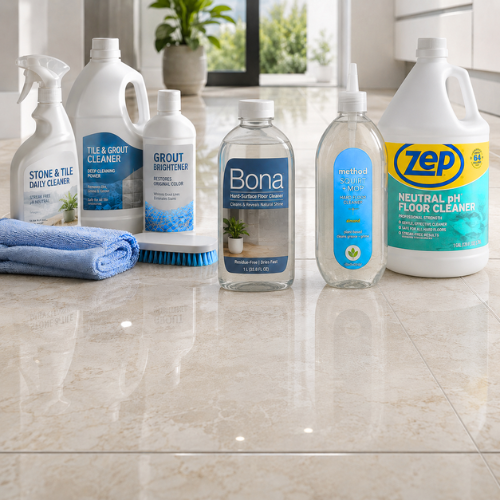
Introduction
You mop the kitchen, and somehow the floor still feels dull. The bathroom tiles look clean from a distance, but under sunlight you notice streaks and grime trapped in the grout. And if you have pets or kids running around, you probably think twice before pouring harsh chemicals all over the floor.
The good news? best cleaning solution ceramic tile floors is actually one of the easiest flooring materials to maintain once you use the right cleaning solution and technique.
The wrong cleaner can leave residue, damage grout, or make glossy tiles look hazy. The right one keeps ceramic floors clean, shiny, and safe for everyday living.
This guide breaks down exactly what works, what doesn’t, and how professional cleaners keep ceramic tile floors looking fresh without overcomplicating the process.
The Short Answer: What Actually Works
Quick Answer: The best cleaning solution ceramic tile floors is a pH-neutral cleaner diluted in warm water — or a simple homemade mix of 1 gallon warm water with ½ cup white vinegar (for unsealed grout-free surfaces) or a few drops of dish soap. Apply with a damp microfiber mop, and always rinse with clean water to prevent residue buildup.
If you’ve ever mopped your ceramic floors and walked away satisfied — only to come back an hour later and find them looking dull, streaky, or weirdly filmy — you’re not alone.
That’s one of the most common complaints homeowners have, and it almost always comes down to the wrong cleaner or the wrong concentration.
Ceramic tile is durable and water-resistant, but it’s not immune to damage from harsh chemicals, improper cleaning methods, or the wrong mop. The good news? Once you know what works, keeping these floors clean is genuinely simple.
Lorem ipsum dolor sit amet, consectetur adipiscing elit. Ut elit tellus, luctus nec ullamcorper mattis, pulvinar dapibus leo.
Understanding Ceramic Tile: Why Cleaner Choice Matters
Ceramic tile is made from clay fired at high temperatures and coated with a protective glaze. That glaze is what gives the tile its shine and makes it relatively resistant to staining — but it’s also what can be dulled, etched, or stripped if you clean with the wrong products.
The glaze is slightly porous around the edges and grout lines. Strong acids (like undiluted vinegar) can wear down grout over time. Strong alkaline cleaners can leave a soap film. And oil-based cleaners? They attract dirt like a magnet.
So the sweet spot for ceramic tile cleaning sits right in the middle: pH-neutral or mildly acidic solutions that lift dirt and grease without damaging the surface or leaving behind residue.
Homemade Tile Floor Cleaner Recipes That Actually Work
Most people are surprised to find out their best ceramic tile cleaner might already be under their kitchen sink. Here are three tried-and-true DIY formulas:
The Everyday Vinegar Solution
- 1 gallon warm water
- ½ cup white distilled vinegar
This is mild enough for weekly use and effective at cutting through light grease and mineral deposits. It leaves no residue and dries quickly.
One important note: Don’t use this on unsealed grout or natural stone tile. The mild acidity can slowly erode grout if used repeatedly without a sealed grout line.
The Dish Soap Gentle Mix
- 1 gallon warm water
- 2–3 drops of liquid dish soap (not more)
This works well for greasy kitchen floors. The trick is using very little soap — more is not better here. Too much dish soap is actually one of the top reasons tile floors look dull after mopping. That filmy residue is leftover soap, and it takes multiple rinses to fully remove it.
The Deep-Clean Baking Soda Paste
- Baking soda + water (enough to form a paste)
Apply directly to stained grout lines or stubborn tile spots, let it sit 5–10 minutes, then scrub with a soft brush and rinse. This works especially well on bathroom tiles with soap scum buildup.
Best Commercial Ceramic Tile Floor Cleaners
When you want something pre-formulated and consistent, these are the product categories worth looking for:
pH-Neutral Floor Cleaners
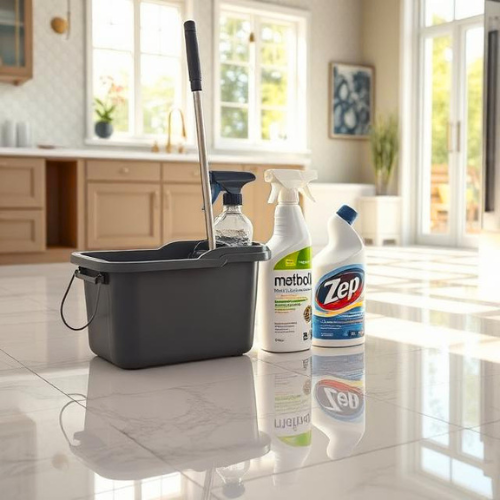
Brands like Bona Hard-Surface Floor Cleaner, Method Squirt + Mop Hard Floor Cleaner, and Zep Neutral pH Floor Cleaner are popular choices. They’re formulated to clean effectively without residue or surface damage.
Enzyme-Based Cleaners
Particularly useful for homes with pets. Enzyme cleaners break down organic material — urine, dander, food residue — at the molecular level. Brands like Rocco & Roxie and Nature’s Miracle have versions safe for tile floors.
Oxygen Bleach Cleaners
For deep-cleaning grout or stained tiles (especially in bathrooms), oxygen bleach products like OxiClean or Bar Keepers Friend (powder form) are effective without the harshness of chlorine bleach.
What to avoid: Ammonia-based cleaners, chlorine bleach used regularly, and anything labeled as an “oil soap” for wood floors. These either leave residue, damage grout, or create a slippery film on ceramic surfaces.
Glossy vs. Matte Ceramic Tile: Different Needs
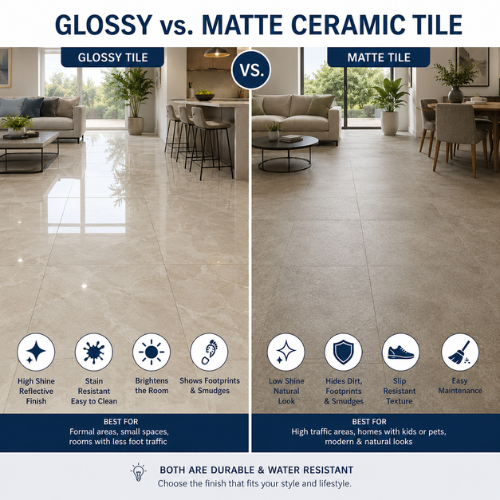
This difference carries more weight than most people think.
Glossy Ceramic Tile
High-gloss tiles show water spots, streaks, and footprints easily. They need a rinse after every mopping to avoid residue. A vinegar solution or a pH-neutral spray cleaner works best. Always dry with a microfiber cloth or mop pad after cleaning to prevent water marks from forming.
Matte Ceramic Tile
Matte tiles hide surface scuffs better but they hold onto soap residue in their textured surface. Use less cleaner per gallon of water, and rinse thoroughly. Avoid anything with a wax or “shine-enhancing” ingredient — it fills the texture and creates a buildup that’s tough to remove.
Textured or Anti-Slip Tile
Common in bathrooms and mudrooms. The texture traps grime in small grooves. Using a scrub brush or grout brush now and then will do more than switching cleaners.
Pet-Safe and Child-Safe Cleaning Options
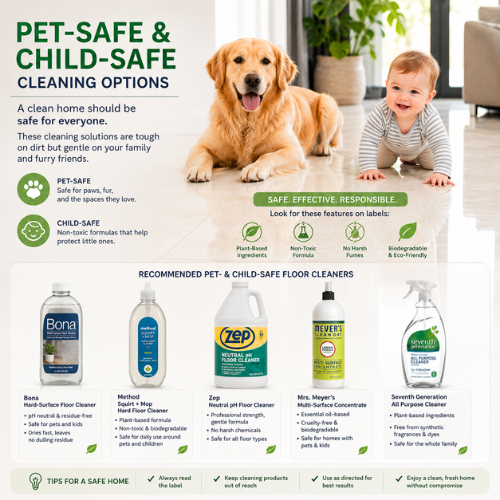
If you have kids crawling around or dogs flopping on the floor after a walk, the cleaning solution you use genuinely matters.
The good news is that the simplest options are also the safest. A warm water and white vinegar solution is non-toxic once it dries. The same goes for plain dish soap diluted in water.
If you’re looking for a paid solution, consider:
- Products labeled EPA Safer Choice certified
- Enzyme-based cleaners (non-toxic to pets and humans)
- Fragrance-free formulas (some essential oils in “natural” cleaners, like tea tree oil, are actually toxic to dogs and cats)
Professional cleaners often avoid: Pine-based cleaners and products with phenols around pets. Even some “natural” cleaners contain compounds that can be harmful if a pet licks the floor before it fully dries.
Allow any mopped floor to dry completely before letting pets or small children back on it — this applies even to products labeled pet-safe.
How to Clean Ceramic Tile Floors: Step-by-Step
Here’s the process that consistently delivers the best results:
Step 1: Dry sweep or vacuum first.
Never skip this. Mopping over loose dirt only spreads it around and leaves behind a muddy film. First, sweep with a soft-bristle broom or vacuum using the hard floor setting.
Step 2: Mix your cleaning solution.
Use warm (not hot) water. Hot water can cause some cleaners to leave more residue. Mix only what you need — don’t reuse dirty mop water.
Step 3: Mop in sections.
Work from the far end of the room toward the exit. Use overlapping, figure-eight strokes with a microfiber mop for the most coverage.
Step 4: Rinse with clean water.
This is the step most people skip — and it’s the step that causes the streaky, dull look. A quick pass with a clean damp mop removes any soap or cleaner residue.
Step 5: Dry the floor.
Especially important for glossy tile. Either air-dry (if you have good ventilation) or run a dry microfiber pad over the surface.
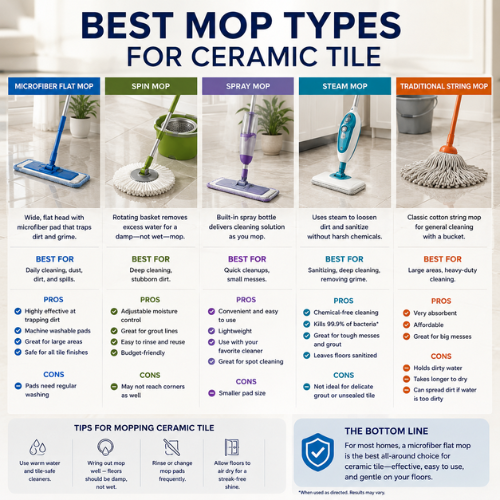
Best Mop Types for Ceramic Tile
The mop matters almost as much as the cleaner.
Microfiber Flat Mop: The gold standard for ceramic tile. Picks up fine particles, leaves minimal water behind, and doesn’t push grime into grout lines the way a traditional string mop does.
Spray Mop: Convenient for quick daily or weekly cleanups. Pre-loaded with your cleaning solution, you spray and mop in one motion. Just make sure the pad is washable and high-quality microfiber.
Steam Mop: Effective for sanitizing without chemicals — great for households with babies or allergy concerns. Most ceramic tile handles steam well, but check with your tile manufacturer if you have a wax or specialty coating.
String Mop (Traditional): Works but tends to leave too much water on the surface and can push dirty water into grout lines. If this is what you have, wring it out thoroughly and use it with a two-bucket system — one for cleaner, one for rinse water.
Grout Cleaning: Don’t Overlook This
Grout is porous and absorbs dirt, grease, and bacteria fast. Clean tile with dirty grout still looks dirty. Here’s how to keep grout in shape:
Regular maintenance: Your normal tile cleaner and a stiff brush weekly will keep grout from building up grime.
For deeper cleaning:
- Apply a baking soda paste, let it sit for 10 minutes, scrub with a grout brush, rinse.
- Alternatively, spray undiluted hydrogen peroxide on grout lines, wait 10 minutes, scrub and rinse. This works especially well on mildew stains in bathrooms.
Grout sealing: One thing professional tile installers consistently recommend — seal your grout every 1–2 years. A sealed grout line resists staining dramatically better and makes your regular cleaning routine much easier. You can DIY this with a bottle of grout sealer and a small applicator brush.Lorem ipsum dolor sit amet, consectetur adipiscing elit. Ut elit tellus, luctus nec ullamcorper mattis, pulvinar dapibus leo.
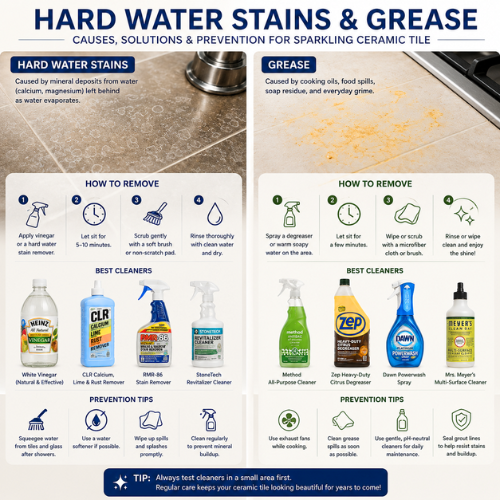
Hard Water Stains and Grease: Targeted Solutions
Hard Water Stains
Those white, chalky deposits on tile near your sink, tub, or dishwasher are calcium and magnesium buildup. Regular mopping won’t touch them.
Solution: White vinegar applied directly to the stain and left for 5–10 minutes will dissolve most light buildup. For heavier deposits, a paste of baking soda and vinegar or a product like CLR (Calcium, Lime & Rust Remover) works well. Always rinse thoroughly after using CLR.
Kitchen Grease
Kitchen tile floors take more punishment than any other room. Cooking grease accumulates fast, especially near the stove.
Solution: A few drops of dish soap in warm water handles most grease well. For heavier buildup, a diluted degreaser like Simple Green (diluted per label instructions) cuts through cooking grease effectively. Scrub with a microfiber mop or soft scrub brush, then rinse twice.
Common Mistakes That Damage Ceramic Tile Floors
Many homeowners accidentally damage their tile over time without realizing what’s causing it. Here are the most common culprits:
Using too much soap. This is the number-one cause of dull, filmy-looking tile. The residue builds up with every cleaning cycle until the floor looks perpetually grimy.
Skipping the rinse. Even pH-neutral cleaners leave a slight residue if not rinsed. Always do a final pass with clean water.
Using abrasive scrubbers on glazed tile. Steel wool, stiff wire brushes, or powdered abrasive cleaners will scratch the glaze. Use soft brushes or microfiber pads.
Letting spills sit too long. Ceramic tile itself resists staining well, but grout doesn’t. Acidic spills like wine, juice, or tomato sauce will seep into unsealed grout fast.
Mopping with hot water. Warm water is fine and actually helps activate cleaners. But very hot water can cause rapid evaporation that leaves mineral deposits — and with some cheaper tiles, repeated thermal cycling can stress the glaze.
Using bleach regularly on colored grout. Chlorine bleach will discolor or strip the color from colored or pigmented grout over time. Use it sparingly and only for serious mold or mildew issues.
How Often Should You Clean Ceramic Tile Floors?
Daily or every other day: Dry sweep or vacuum to remove loose dirt and debris. This alone prevents most buildup.
Weekly: Full mopping with your cleaning solution of choice. High-traffic areas like kitchens and entryways may need this twice a week.
Monthly: Focus on grout lines with a scrub brush. Check for any staining or discoloration.
Every 1–2 years: Reseal grout lines. This single maintenance step dramatically extends the life and appearance of your tile floors.
How to Keep Tiles Shiny Without Residue
The secret to consistently shiny ceramic tile floors isn’t a special product — it’s a clean rinse and a dry finish.
- Use the minimum effective amount of cleaner. Less is genuinely more.
- Always rinse with plain clean water after mopping.
- Buff dry with a clean, dry microfiber pad — especially on glossy tile.
- Avoid any product labeled “tile polish” or “floor shine” unless it’s specifically designed for ceramic. Many of these are formulated for vinyl or linoleum and leave a waxy buildup on ceramic tile that’s hard to remove.
One approach professional cleaners use in high-end homes: a two-bucket system with plain water in the second bucket, used exclusively for a final rinse mop pass. It sounds simple because it is — and it makes a visible difference.
FAQ
Q: What is the best homemade cleaning solution for ceramic tile floors?
A: A mix of 1 gallon of warm water and ½ cup of white vinegar works well for most ceramic tile. For greasier floors, swap the vinegar for 2–3 drops of dish soap and rinse thoroughly.
Q: Is vinegar safe to use on ceramic tile floors?
A: Yes, diluted white vinegar is safe on ceramic tile itself. However, avoid using it on unsealed grout regularly, as repeated exposure to mild acid can slowly erode the grout over time.
Q: What is the best commercial ceramic tile floor cleaner?
A: pH-neutral floor cleaners like Bona Hard-Surface Floor Cleaner or Method Squirt + Mop are well-regarded for ceramic tile. They clean effectively without leaving residue or damaging the glaze.
Q: What floor cleaner is safe for pets?
A: EPA Safer Choice certified cleaners and enzyme-based cleaners are the safest for homes with pets. Avoid pine-based cleaners and anything containing phenols, which can be harmful to dogs and cats.
Q: How do you clean ceramic tile floors without leaving streaks?
A: Use less cleaner, rinse with plain water after mopping, and dry the surface with a clean microfiber pad. Streaks almost always come from soap or cleaner residue left on the surface.
Q: Can you use a steam mop on ceramic tile floors?
A: Yes, steam mops work well on most ceramic tile. They sanitize without chemicals, which is ideal for households with babies or allergy concerns. Avoid steam mopping if your tile has a wax coating or specialty finish.
Q: How do I remove hard water stains from ceramic tile?
A: Apply undiluted white vinegar directly to the stain, let it sit for 5–10 minutes, then scrub and rinse. For stubborn deposits, CLR (Calcium, Lime & Rust Remover) is effective — rinse thoroughly after use.
Final Takeaways
Best cleaning solution ceramic tile floors is one of the most durable and low-maintenance flooring options out there — but only if you clean it right.
The biggest lesson most homeowners learn the hard way is that more cleaner doesn’t mean cleaner floors. The opposite is often the case.
Stick to pH-neutral or mildly acidic solutions, use a microfiber mop, always rinse with clean water, and seal your grout on a regular schedule.
Whether you go homemade with the vinegar-and-water mix or reach for a commercial pH-neutral cleaner, those basics will carry you 90% of the way to floors that look genuinely great.
The other 10%? Dry your glossy tiles after mopping. Your future self will thank you.