
Best Laminate Floor Cleaning Solution
Best Laminate Floor Cleaning Solution: What Actually Works (and What Ruins Your Floors)
Introduction
You mopped your laminate floor, stepped back, and it somehow looks worse than it did before. Streaky. Dull. A little hazy. Sound familiar? You are not doing anything wrong — you are probably just using the wrong cleaner.
Laminate flooring looks great, but it has a quirk most people don’t know about: it hates moisture and it reacts badly to the wrong cleaning products.
The floor has a thin protective wear layer over a photographic image of wood. Once that layer gets damaged or swells from excess water, there is no fixing it short of replacement.
After years of working with laminate floors in homes, rentals, and everything in between, I have put together this guide to walk you through the best laminate floor cleaning solutions — commercial and homemade — along with the tools that make the biggest difference and the mistakes that quietly kill your floors.
The Short Answer: Best Laminate Floor Cleaning Solution
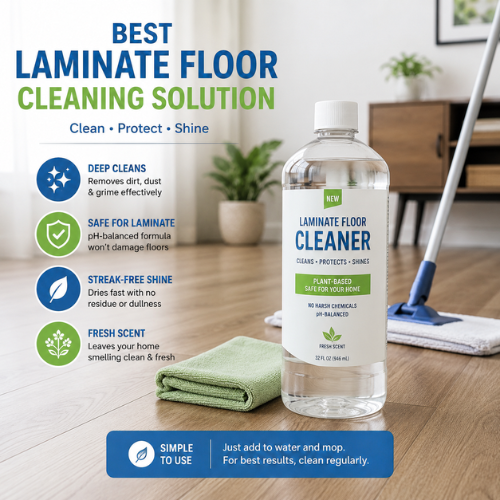
The best laminate floor cleaning solution is a pH-neutral cleaner designed specifically for laminate floors, used lightly with a microfiber mop.
That combination removes dirt and residue without damaging the laminate protection layer or leaving behind streaks.
The Best Basic Cleaning Formula
For most laminate flooring, this works best:
- Warm water
- Small amount of laminate-safe cleaner
- Damp microfiber mop
- Dry microfiber cloth afterward if needed
Professional cleaners typically avoid soaking laminate floors because moisture is laminate’s biggest enemy.
Even “water-resistant” laminate flooring can develop edge swelling if too much water sits on the surface repeatedly.
Why Laminate Floors Get Streaky So Easily
Laminate flooring has a thin protective top layer that shows residue more than people expect.
Streaks usually happen because of:
- Too much cleaner
- Dirty mop water
- Oil-based products
- Hard water minerals
- Using the wrong mop
One of the most common mistakes is thinking more cleaner equals cleaner floors.
In reality, laminate floors often look best when you use less product and more microfiber.
Commercial Cleaners vs. Homemade Solutions
Commercial Laminate Cleaners
Commercial cleaners formulated specifically for laminate are the safest bet. They are designed to be pH-neutral, leave no film behind, and dry fast. A few that consistently get good results:
- Bona Hard-Surface Floor Cleaner — widely recommended, dries streak-free, no residue
- Black Diamond Wood & Laminate — Suitable for both wood and laminate with a safe formula.
- ZEP Hardwood & Laminate Floor Cleaner — Effective in spray form for quick cleanups.
- Method Squirt + Mop Hard Floor Cleaner — plant-based, low VOC, smells good
Avoid any commercial cleaner labeled for tile or vinyl unless it specifically says it is safe for laminate. Oil-based or wax-based products will cloud the finish over time.
Homemade Floor Cleaner for Laminate
Want to skip the store? A basic homemade floor cleaner for laminate that actually works:
- 1 cup warm water
- 1 cup rubbing alcohol (70% isopropyl)
- 1/3 cup white vinegar (use sparingly — see next section)
- 3-5 drops of dish soap (Dawn or similar)
Mix in a spray bottle and apply lightly. This formula evaporates quickly, which is exactly what you want on laminate. The alcohol is the secret — it speeds up drying and kills surface bacteria without soaking the boards.
Professional cleaners typically avoid ammonia-based products even in homemade recipes. Ammonia can dull laminate finishes over time and strip away the wear layer with repeated use.
Is Vinegar Safe for Laminate Floors?
This one comes up constantly, and the answer is: use it carefully, not liberally.
White vinegar is acidic (pH around 2.5), and repeated use can slowly degrade laminate’s protective coating. A diluted vinegar solution — roughly one part vinegar to ten parts water — used occasionally is not going to destroy your floor.
But spraying undiluted vinegar or mopping with a heavy vinegar solution every week? Over time, you will notice the finish dulling and losing its sheen.
If you prefer a natural cleaning solution, the homemade recipe above with just a small amount of vinegar is fine. But if you have a newer laminate floor or one with a glossy finish, you are better off sticking with a pH-neutral cleaner altogether.
Cleaners That Damage Laminate Flooring — Avoid These
One of the most common mistakes homeowners make is reaching for whatever cleaner is under the sink. Here is what to keep away from laminate:
- Steam mops — heat and steam force moisture into the seams and cause swelling and warping. This is the number one way to ruin laminate floors.
- Bleach or bleach-based cleaners — discolor the finish and can lift the top layer.
- Murphy Oil Soap — leaves a waxy residue that builds up and makes floors look hazy.
- Pine-Sol and similar pine cleaners — too harsh; can dull the finish with repeated use.
- Wax or polish products — laminate is pre-finished and does not need wax. Applying it creates buildup that traps dirt.
- Wet Swiffer pads with too much solution — the Swiffer WetJet is often criticized for leaving streaks on laminate. Use it sparingly if at all.
- Undiluted essential oils — some cleaning influencers recommend tea tree or lavender oil directly on floors. These can leave residue and are not good for the surface over time.
Moisture damage warning: Never let water pool on laminate flooring. If you overshoot and leave a wet spot, wipe it immediately. Boards that swell from moisture damage are permanent — no amount of drying will bring them back to normal.
Best Mop for Laminate Floors
The cleaner matters, but the mop matters just as much. Laminate is unforgiving about too much water, so your tool needs to control moisture.
Microfiber Mop for Laminate Floors — The Best Option
A laminate floor microfiber mop is the top recommendation, hands down. Microfiber pads are designed to pick up debris rather than push it around, they hold just enough moisture without saturating the floor, and they dry quickly after use. Flat-head microfiber mops work best because they cover more surface area and get into corners.
Look for microfiber mops with washable, reusable pads. The O-Cedar ProMist MAX and Bona Microfiber Floor Mop are popular choices that work well with laminate.
Feature | Microfiber Mop | Sponge Mop |
Moisture control | Excellent — releases minimal water | Poor — holds too much water |
Dirt pickup | Traps debris in fibers | Pushes debris around |
Streak risk | Low — dries quickly | High — leaves water trails |
Reusability | Washable pads, very reusable | Degrades over time, harbors bacteria |
Flat-head microfiber mops, especially the spray-style ones, are the best mops for laminate floors across the board. If you are using a string mop or a traditional cotton mop — it is time to replace it.
How to Clean Laminate Floors Step-by-Step
Follow this routine and your floors will stay clean, streak-free, and looking good for years.
Step 1: Dry Sweep or Vacuum First (Always)
Before any liquid touches the floor, remove loose dirt, dust, and pet hair. A microfiber dry mop or a vacuum on the hard floor setting works best. Skipping this step means you are just dragging grit around with your wet mop, which scratches the surface.
Step 2: Mix or Prepare Your Cleaner
Use a pH-neutral laminate cleaner diluted to the manufacturer’s instructions, or your homemade spray solution. Fill a spray bottle rather than a bucket. Pouring liquid straight onto the floor is too risky — you’ll almost always use more than necessary.
Step 3: Spray a Small Section and Mop
Work in 4-by-4-foot sections. Spray lightly — the floor should look barely damp, not wet. Mop in the direction of the planks using your flat microfiber mop. Overlap each pass slightly to avoid missed strips.
Step 4: Dry as You Go
With a properly damp mop and a fast-drying cleaner, you typically do not need to hand-dry the floor. But if you notice water sitting for more than 30 seconds, wipe it up with a dry microfiber cloth.
Step 5: Spot-Clean Stubborn Stains
For sticky spots, grease, or scuffs: apply a small amount of rubbing alcohol to a microfiber cloth and work it directly on the spot. For heel marks, a pencil eraser sometimes does the trick. Avoid scrubbing with anything abrasive.
How to Get Rid of Streaks and Residue on Laminate Floors
Streaks are usually caused by one of three things: too much cleaner, a cleaner that leaves residue, or a dirty mop head. Here is how to fix it.
- Too much soap — Mix warm water with a splash of rubbing alcohol and mop again. No soap. This cuts through soap residue without leaving more.
- Old cleaner buildup — Use a straight warm water + alcohol solution (no soap at all) for a full cleaning pass. Repeat if needed.
- Dirty mop pad — Wash your mop pads after every use. A mop that smells sour is redistributing bacteria and old cleaner residue on every pass.
- Hard water — If your tap water is heavy with minerals, use distilled water for your cleaning solution. Mineral deposits show up as white haze on laminate.
Streak prevention tip: Less is more. The thinnest, barely-there mist of cleaner, applied to a clean and freshly washed microfiber pad, will give you a streak-free laminate floor every time.
Pet-Safe Cleaning Options for Laminate Floors
If you have dogs or cats, your floors take a beating. Here is what is safe to use around pets and what works specifically for pet messes.
Everyday Pet-Friendly Cleaners
- Bona Hard-Surface Floor Cleaner — labeled safe for pets once dry
- Method Hard Floor Cleaner — plant-based, PETA certified
- Simple Green Naturals Floor Care — EPA Safer Choice, non-toxic
Avoid any floor cleaner containing pine oil, phenol, or benzalkonium chloride — these are common in disinfecting cleaners and are toxic to cats in particular. If the ingredient list sounds like a chemistry lesson, pass on it.
Handling Pet Accidents on Laminate
Speed is everything. The longer urine sits, the more it seeps into the seams and causes swelling and permanent odor. Blot immediately with paper towels, then spray the spot with a 50/50 water and white vinegar solution. Let it sit 30 seconds, then wipe dry. Follow up with an enzymatic cleaner (like Rocco & Roxie or Nature’s Miracle) to break down odor at the molecular level.
Do not scrub — it pushes the liquid deeper. Always blot.
How Often to Clean Laminate Floors
General guideline:
- Daily or every other day: Dry sweep or dust mop high-traffic areas
- Weekly: Full damp-mop cleaning
- Monthly: Deep clean with a laminate-specific cleaner to address buildup
Homes with pets or kids may need more frequent mopping — sometimes daily in kitchen and entry areas. The more consistently you dry-sweep, the less buildup you get and the easier your mopping sessions become.
Common Mistakes That Ruin Laminate Floors
After seeing the damage firsthand, these are the mistakes worth repeating:
- Using a steam mop — this is the fastest way to destroy laminate. The warranty on most laminate flooring is voided if you use a steam mop. Full stop.
- Mopping without sweeping first — drags grit across the surface and scratches the wear layer.
- Using bucket-and-mop systems — too much water, almost every time.
- Letting spills sit — laminate has joints between boards. Any liquid that gets into those joints swells the core.
- Applying wood floor polish or wax — laminate is not real wood. Wax and polish products create a sticky film that looks fine at first, then collects dirt and becomes a nightmare to remove.
- Ignoring the mop pad — a pad that has been used ten times without washing is doing more harm than good. It is redepositing old cleaner and bacteria.
How to Maintain Shine on Laminate Floors Without Damaging Them
Laminate comes pre-finished, so the shine is built in. The goal is to preserve it, not add to it.
- Use furniture felt pads on all chair and table legs to prevent fine scratches.
- Place entry mats at all exterior doors to catch dirt and moisture before it reaches the floor.
- Use a pH-neutral cleaner consistently — buildup from soapy products is the leading cause of dull-looking laminate.
- Run a humidifier in dry climates. Very dry air causes laminate planks to shrink and gap slightly at the seams.
- Never use abrasive scrubbers, steel wool, or rough sponges on laminate.
If the shine has already faded from buildup, a full cleaning pass with the rubbing alcohol-and-water solution (no soap) often restores it without needing to buy anything new.
Frequently Asked Questions
Does vinegar damage laminate floors?
Undiluted vinegar used regularly can gradually dull the finish. Diluted vinegar (1 part vinegar to 10 parts water) used occasionally is generally safe. For regular cleaning, a pH-neutral cleaner is a better choice.
Why do my laminate floors look streaky after mopping?
Streaks are usually caused by too much cleaner, a soap that leaves residue, hard water, or a dirty mop pad. Try mopping again with a water-and-rubbing-alcohol solution and a clean pad.
How do I clean pet urine from laminate flooring?
Blot immediately, then apply a 50/50 vinegar-and-water solution. After wiping dry, use an enzymatic cleaner to eliminate odor at the source.
Is Bona safe for laminate floors?
Yes. Bona Hard-Surface Floor Cleaner is one of the most consistently recommended products for laminate. It is pH-neutral, dries quickly, and does not leave residue or buildup.
How often should laminate floors be mopped?
In most households, once a week is enough. High-traffic areas or homes with pets may need mopping two to three times per week. Daily dry-sweeping reduces how often mopping is necessary.