
Instant Pot vs Air Fryer Which Is Better?
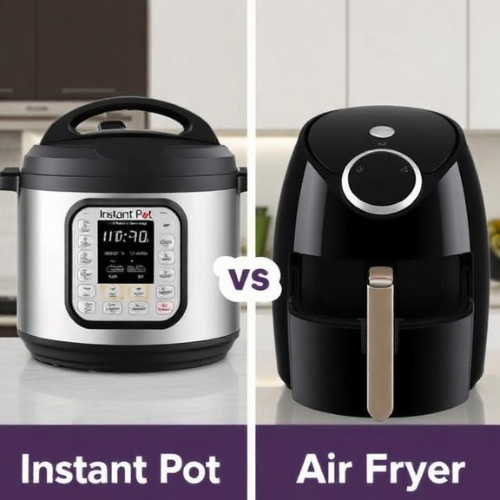
Instant Pot vs Air Fryer: The Complete Comparison Guide and cooking speed, cost, and ease of use
Introduction
If you’re standing in a kitchen appliance aisle—or scrolling through online retailers—wondering whether to invest in an Instant Pot or air fryer, you’re not alone.
These two countertop kitchen appliances have revolutionized how American families cook, yet they work in completely different ways. One uses pressure cooking to tenderize tough cuts of meat in 20 minutes.
The other uses rapid air circulation to create crispy food with little to no oil. Both offer quicker meals, healthier cooking, and simpler cleanup compared to traditional stovetop methods.
This guide cuts through the marketing hype and gives you honest, practical insights to decide which appliance deserves counter space in your kitchen.
We’ve examined the technology behind each appliance, compared real-world results, assessed the health advantages, and tested both across a wide range of recipes.
Whether you’re a beginner cook, apartment dweller, or seasoned home chef, you’ll find the answer that matches your needs.
Quick Verdict: Instant Pot vs Air Fryer
Choose an Instant Pot if you want: a multi-function cooker that handles pressure cooking, slow cooking, steaming, sautéing, and rice cooking. Best for meal prep, batch cooking, and families who eat diverse cuisines.
Choose an Air Fryer if you want: crispy, golden-brown food with minimal oil, fast cooking times, and simplicity. Best for frozen foods, reheating, and families focused on oil-free healthy cooking.
Choose Both if you want: maximum kitchen versatility. An Instant Pot air fryer combo model combines both technologies in one appliance, though these sacrifice some specialized performance for convenience.
Quick Winner Table
Category | Winner |
Speed for Crispy Foods | Air Fryer |
Batch Cooking | Instant Pot |
Healthy Cooking | Tie |
Meal Prep | Instant Pot |
Ease of Use | Air Fryer |
Versatility | Instant Pot |
Kitchen Space | Air Fryer |
Family Meals | Instant Pot |
Frozen Foods | Air Fryer |
Overall Value | Depends on Lifestyle |
What Is an Instant Pot? Understanding Multi-Function Pressure Cooking
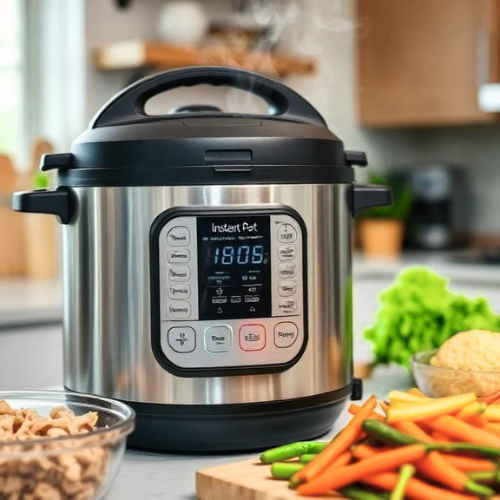
An Instant Pot is a multi-function electric pressure cooker that has transformed home cooking since its launch. Unlike traditional stovetop pressure cookers, the Instant Pot uses advanced microprocessor technology to regulate temperature and pressure automatically, making pressure cooking safe and foolproof.
Core Functions of an Instant Pot
Pressure Cooking: The primary mode that cooks food 30% faster than conventional methods by trapping steam and raising internal temperature. Perfect for tenderizing tough cuts of beef, cooking dried beans in minutes, or creating fall-apart pulled pork.
Slow Cooking: Operates like a traditional slow cooker, ideal for chili, stews, and dishes that benefit from long, gentle heat.
Steaming: A gentle method that preserves nutrients, perfect for vegetables and fish.
Sautéing: Allows you to brown meat and vegetables before pressure cooking, building flavor in a single pot.
Rice Cooking: Specialized programs for white rice, brown rice, and grains with consistent, fluffy results.
Yogurt Making: Some models include a yogurt function for fermenting homemade yogurt.
Sous Vide: Premium models include precise temperature control for sous vide cooking.
The Instant Pot is essentially a compact kitchen appliance that consolidates multiple cooking methods into one unit, making it invaluable for apartment dwellers and those with limited counter space.
What Is an Air Fryer? The Rise of Oil-Free Crispy Cooking
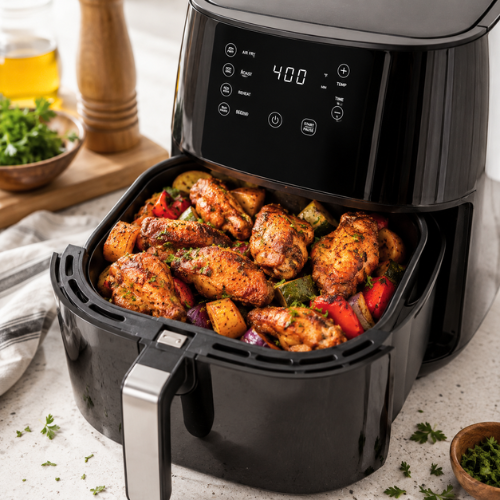
An air fryer is a countertop convection oven that uses rapid air technology to circulate superheated air (typically 350–400°F) around food at high speed. This creates a crispy, golden-brown exterior through the Maillard reaction—the same browning that occurs when you deep-fry—without submerging food in oil.
How Air Fryers Work
Air fryers heat a coiled element, then a powerful fan circulates the hot air rapidly around the cooking chamber. Food sits on a perforated basket that allows air to reach all sides. Most foods need little to no oil, though a light spray of cooking oil enhances browning and flavor.
Key Advantages of Air Fryer Cooking
Oil-Free or Low-Oil: Perfect for health-conscious families focused on reducing fat intake. You can achieve crispy textures with a fraction of the oil traditional deep frying requires.
Speed: Most foods cook in 15–25 minutes, making air fryers ideal for fast meal preparation on weeknights.
Crispy Results: Superior to other methods at creating that satisfying crunch—ideal for frozen fries, chicken wings, crispy vegetables, and breaded items.
Easy Cleanup: Most baskets are non-stick and dishwasher-safe. Since you’re not deep-frying, there’s no oil to dispose of or greasy stovetop splatters.
Family-Friendly: Kids and adults alike enjoy the speed and consistent results, encouraging more home cooking.
Instant Pot vs Air Fryer: Key Differences
Feature | Instant Pot | Air Fryer |
Primary Cooking Method | Pressure cooking, slow cooking, steaming, sautéing | Rapid air convection (frying without oil) |
Cooking Speed | Fast for stews/beans (20–40 min) | Ultra-fast for frozen foods (15–25 min) |
Food Texture | Tender, moist, fall-apart (great for braises) | Crispy exterior, tender interior |
Best For | Tough cuts of meat, dried beans, grains, batch cooking | Frozen foods, leftovers, crispy vegetables, snacks |
Oil Use | Minimal (use for sautéing step) | Minimal to none (or light spray) |
Versatility | 6–10+ different cooking functions | Single cooking method (though multiple modes) |
Ease of Use | Learning curve; manual settings required | Intuitive; set temperature and time |
Cleaning | Inner pot removable; some residue sticks | Non-stick basket; generally easier |
Kitchen Space | Compact footprint; takes up one counter spot | Similar footprint; air circulation space needed |
Energy Efficiency | Very efficient; sealed environment | Efficient; smaller cooking chamber |
Noise Level | Quiet operation | Fan noise (60–70 dB) |
Price Range | $50–$300+ | $60–$400+ |
Best Recipes | Chili, pulled pork, risotto, curry, dried beans | Fries, chicken wings, frozen vegetables, reheated leftovers |
Meal Prep Friendly | Excellent; batch cook large quantities | Good for freezer meals; less ideal for storage |
Learning Curve | Moderate; benefits from practice | Minimal; very intuitive |
Cooking Technology Comparison: Pressure vs. Air Convection
Understanding how each appliance works helps clarify why they excel at different tasks.
Instant Pot Pressure Cooking Technology
Pressure cooking traps steam inside a sealed chamber, raising the internal pressure to 11.6 PSI (pounds per square inch). This increased pressure raises water’s boiling point from 212°F to approximately 250°F. At this higher temperature, collagen in tough cuts of meat breaks down rapidly, and dried beans absorb water faster.
Real-world example: A beef chuck roast that requires 3 hours of braising on the stovetop becomes fall-apart tender in 35 minutes under pressure, then 15 minutes of natural pressure release. The result is rich, concentrated flavors and succulent texture that’s impossible to replicate quickly using other methods.
The multi-function cooker aspect means you can sauté aromatics (onions, garlic, ginger) in the same pot using the sauté function, building flavor, then switch to pressure cooking without dirtying additional pans.
Air Fryer Rapid Air Technology
Rapid air convection uses a heating element and powerful fan to circulate superheated air at speeds exceeding 3,000 RPM around food.
This high-speed air circulation removes moisture from the food’s surface, allowing proteins and starches to brown via the Maillard reaction—the same chemical process that creates browning when you sear meat or bake bread.
Real-world example: Frozen french fries go from freezer to golden-brown, crispy perfection in 18 minutes without thawing or deep-frying. No oil splatter, minimal mess, and results superior to oven fries.
The air fryer for healthy cooking advantage is significant: you achieve that satisfying crunch and browning with virtually no oil. Traditional deep-frying uses cups of oil; air frying uses a light spray or none at all.
Technology Winner
- For speed and crispy results: Air fryer wins.
- For tenderizing and versatility: Instant Pot wins.
Cooking Speed Comparison: Which Is Faster?
This depends on what you’re cooking.
Instant Pot Cooking Speed
Pressure Cooking Times:
- Dried beans (from scratch): 25–40 minutes
- Chicken breasts: 8–12 minutes
- Beef chuck roast: 35–45 minutes
- Frozen chicken thighs: 15–20 minutes
- Hard-boiled eggs: 5–8 minutes
- Rice: 3–8 minutes (depending on type)
- Frozen vegetables: 2–5 minutes
Important caveat: These times don’t include preheat time (5–10 minutes) or pressure release time (10–15 minutes for natural release). Total time is longer than stovetop cooking for some items, but faster for tough cuts and dried beans where pressure cooking excels.
Air Fryer Cooking Speed
Typical Air Fryer Times:
- Frozen french fries: 15–20 minutes
- Frozen chicken nuggets: 10–15 minutes
- Chicken breasts (fresh): 12–18 minutes
- Frozen fish: 12–15 minutes
- Crispy vegetables: 15–20 minutes
- Reheated pizza: 5–8 minutes
- Frozen mozzarella sticks: 8–10 minutes
Advantage: No preheat time for most models (or minimal 2–3 minutes). You can go from freezer to plate faster than stovetop methods.
Speed Verdict
Air fryer is faster for: frozen foods, reheating, quick snacks, and everyday weeknight dinners.
Instant Pot is faster for: tenderizing tough cuts, cooking dried beans, and batch cooking large quantities (time per serving drops dramatically).
Taste and Texture Comparison
Instant Pot Textures and Flavors
Pressure cooking excels at:
Tenderizing tough cuts: Chuck roast, brisket, and short ribs become impossibly tender and succulent. The collagen breaks down into gelatin, creating rich, mouth-coating sauces.
Concentrated flavors: Braises and stews develop deep, layered flavors. The sealed environment prevents moisture and flavor from escaping.
Creamy risotto: The Instant Pot is legendary for risotto. Constant stirring isn’t needed; you get creamy, perfectly cooked rice in 6 minutes.
Comfort food appeal: Best Instant Pot recipes include pulled pork, chili, chicken curry, and beef stew—dishes that taste like grandma spent hours cooking.
Drawback: Foods can taste slightly less browned since pressure cooking doesn’t use direct, dry heat. This is why the sauté function matters—browning meat first adds complexity.
Air Fryer Textures and Flavors
Air fryers excel at:
Crispy, crunchy exterior: Unbeatable at creating that satisfying textural contrast—crispy outside, tender inside. Frozen fries, chicken wings, and breaded vegetables achieve restaurant-quality crunch.
Golden-brown coloring: The Maillard reaction creates appealing visual appeal and complex browning flavors.
Texture variety: You can achieve different textures by adjusting time and temperature—less time for softer interiors, more time for crispier centers.
Drawback: Certain foods can dry out if cooked too long. Air fryers aren’t ideal for long, slow, moist cooking (like stews or braises).
Taste Verdict
- For comfort, tender, richly-flavored meals: Instant Pot.
- For crispy, crunchy, satisfying textures: Air fryer.
Healthy Cooking Benefits Comparison
Both appliances support healthy eating, but in different ways.
Instant Pot Health Benefits
✓ Oil-Free Steaming: The steaming function cooks vegetables and fish without added fat, preserving heat-sensitive vitamins better than boiling.
✓ Lean Meat Tenderizing: Pressure cooking tenderizes lean cuts without adding fat. You can use minimal oil (or none) during the sauté step.
✓ Fiber-Rich Beans: Cooking dried beans from scratch costs pennies and provides whole-food fiber. Much cheaper and healthier than canned beans with added sodium.
✓ Batch Cooking: Cook large quantities of healthy meals on Sunday, portion into containers, and eat well all week—ideal for meal prep.
✓ Minimal Oil: Unlike traditional frying, pressure cooking uses almost no oil (just a splash for the sauté step).
✗ Not Oil-Free: The sauté function does use some oil, making it slightly less ideal than air frying if your goal is zero added fat.
Air Fryer Health Benefits
✓ Oil-Free or Near-Zero Oil: The primary health advantage. You get crispy textures with a light spray or none at all—dramatically reducing calories from oil.
✓ Lower Calories: Compared to deep-fried equivalents, air-fried foods contain 70–80% fewer calories from fat.
✓ Preserves Nutrients: Quick cooking times minimize nutrient loss in vegetables.
✓ Easy for Healthy Frozen Foods: Fish fillets, frozen vegetables, and lean protein cook perfectly without additional oil.
✓ Portion Control: The basket limits serving size, naturally encouraging portion awareness.
✗ Limited Cooking Methods: Can’t slow-cook, steam, or pressure cook. Less versatile for varied meal prep.
✗ Less Ideal for Whole Grains: Air fryers don’t cook rice, quinoa, or dried beans well—these need moisture.
Health Benefits Verdict
- For versatile, whole-food, nutrient-rich meal prep: Instant Pot.
- For oil-free, crispy, low-calorie cooking: Air fryer.
Best for overall health: Own both. Use the Instant Pot for beans, grains, and stews. Use the air fryer for crispy vegetables, fish, and lean proteins.
Ease of Use Comparison
Instant Pot Ease of Use
Learning Curve: Moderate. New users should expect 2–3 uses before feeling confident.
What makes it easier:
- Modern Instant Pots have preset programs (pressure cook, slow cook, steam, sauté, yogurt, rice) with one-button operation
- The pot handles temperature and pressure automatically; you don’t manually adjust like old stovetop pressure cookers
- Clear display and intuitive buttons
- Less monitoring needed; you set it and walk away
What makes it harder:
- Understanding natural pressure release vs. quick release (affects texture)
- Determining cooking times for recipes not included in the manual.
- Managing liquid—too little causes burning; too much means watery food
- Natural pressure release takes 10–20 minutes; impatient cooks get frustrated waiting
Accessibility: Requires reading manual; benefits from watching YouTube tutorials. Best Instant Pot recipes come with detailed instructions.
Air Fryer Ease of Use
Learning Curve: Minimal. Most users feel confident on the first use.
What makes it easier:
- Set temperature, set time, press start—that’s it
- Intuitive dial or digital controls
- Minimal learning required; results are forgiving
- Quick feedback; you see results in 15–25 minutes
- No special techniques or understanding of pressure release needed
What makes it harder:
- Different air fryers have different temperature settings; recipes may need tweaking
- You must remember to shake the basket halfway through (for even cooking)
- Overcooking is easy; a few extra minutes can burn food
- Batch cooking is limited; the basket is smaller than an Instant Pot
Accessibility: Perfect for beginners, elderly cooks, and those who prefer simplicity.
Ease of Use Verdict
- Easiest for beginners: Air fryer.
- Easier for batch cooking: Instant Pot (once you understand the basics).
Overall: Air fryer requires less learning; Instant Pot rewards practice with versatility.
Cleaning & Maintenance
Instant Pot Cleaning & Maintenance
Daily Cleaning Points
- Remove inner pot immediately after cooking – Let cool 5 minutes, then remove from heating base and rinse under warm water
- Rinse the sealing ring thoroughly – Remove after every use and wash separately; this silicone gasket absorbs odors from fish, curry, and garlic
- Wipe the exterior heating base – Use damp cloth only; never submerge the electrical base in water
- Clean the inner lid vents – Food particles accumulate around the pressure release valve; use a soft brush or damp cloth
- Check the float valve – Ensure it moves freely; this safety valve can get stuck with mineral deposits
- Rinse the lid under running water – The underside collects condensation and food spray; ensure it’s completely dry before closing
Weekly Maintenance Points
- Inspect the sealing ring for discoloration – Look for cracks, hardening, or loss of elasticity
- Wipe moisture from the heating chamber – Condensation can accumulate if the pot sits unused
- Check for food residue in the pressure release valve – Use a toothpick or soft brush to clear blockages
- Dry all components thoroughly – Store with the lid off to prevent mold growth inside the sealing ring
- Verify no water pooling in the base – Empty any condensation that collects under the heating element
Common Cleaning Mistakes to Avoid
- Don’t use steel wool or harsh scouring pads – Scratches the stainless steel permanently
- Don’t forget to remove sealing ring after cooking – Trapped moisture causes mold and permanent odors
- Don’t submerge the heating base – Water enters electrical components and causes failure
- Don’t ignore mineral buildup – In hard-water areas, monthly vinegar cycle is essential
- Don’t use bleach or strong chemicals – Residues contaminate future food
- Don’t assume quick-release is instant – Some steam remains; wait 30 seconds before opening
- Don’t force the float valve – It should move freely; if stuck, soak in vinegar rather than forcing
Air Fryer Cleaning & Maintenance
Daily Cleaning Points
- Let the basket cool 3–5 minutes – Prevents warping and allows safe handling
- Rinse basket under warm running water – Most foods slide off immediately due to non-stick coating
- Use soft sponge for stubborn residue – Avoid steel wool or abrasive pads that damage the non-stick surface
- Wipe the interior chamber with damp cloth – Remove grease splatter that accumulates on chamber walls
- Dry all components before reassembling – Prevents rust and electrical issues
- Place basket in dishwasher if desired – Most non-stick baskets are dishwasher-safe; hand-washing extends longevity
- Wipe heating chamber ceiling – Grease can splatter upward; keep this area clean to prevent smoking
Weekly Maintenance Points
- Inspect the non-stick coating – Look for peeling, flaking, or discoloration
- Check the heating element cover – Ensure no debris or grease blocks airflow around the heating coil
- Wipe glass viewing window – Use microfiber cloth and gentle glass cleaner for streak-free clarity
- Verify basket moves freely – Ensure no warping prevents proper seating in the heating chamber
- Empty any grease drippings – Some models have a small tray below the basket; empty and rinse
- Check air vents and exhaust port – Ensure no blockages restrict airflow
- Inspect power cord – Look for damage, kinks, or wear
Common Cleaning Mistakes to Avoid
- Don’t use metal utensils on the basket – Scratches and cuts non-stick coating permanently
- Don’t submerge heating chamber in water – Damages electrical components and heating element
- Don’t use oven cleaner or harsh chemicals – These peel and damage the non-stick surface
- Don’t ignore grease buildup in the chamber – Can become a fire hazard; requires monthly attention
- Don’t forget to leave clearance space during storage – Blocks air vents and reduces heat circulation
- Don’t wash immediately after cooking – Let basket cool completely to prevent warping
- Don’t use the basket as a serving dish – Non-stick coating isn’t designed for this; degrades faster
- Don’t assume “non-stick safe” means “durable” – Still requires gentle handling and proper cleaning
- Don’t stack items inside basket during storage – Weight warps the basket permanently
- Don’t clean heating element directly – Water entering the element causes electrical failure
Noise Level Comparison Table
Noise Factor | Instant Pot | Air Fryer |
Operating noise level | 40–50 decibels | 70–80 decibels |
Fan noise | None (no fan) | Constant throughout cooking |
Sound description | Quiet hissing, occasional beeps | Continuous compressor-like drone |
Loudest moment | Quick pressure release (5 sec) | Entire cooking cycle |
Noise duration per use | 20–60 minutes | 15–30 minutes |
Adjusted volume options | Beep can be muted | Limited adjustment |
Suitable for night cooking | Yes | No |
Suitable for early morning | Yes | No |
Apartment-friendly | Very | Not recommended |
Disturbs sleeping people | Unlikely | Very likely |
Acceptable noise for neighbors | Yes | Questionable |
Loudness compared to conversation | Similar | Louder |
Comparable to common appliances | Microwave | Dishwasher |
Noise in enclosed spaces | Minimal impact | Significantly amplified |
Noise in open kitchens | Barely noticeable | Noticeable throughout space |
Premium model noise reduction | Minimal difference | Significant improvement |
Budget model noise level | Consistent across prices | Higher noise in cheaper models |
Instant Pot Air Fryer Combo Models
An instant pot air fryer combo combines pressure cooking and air frying in one appliance.
Benefits:
- Saves counter space
- Multi-function cooking
- Excellent versatility
- Great for families
Popular combo options often include:
- Pressure cooking
- Air frying
- Roasting
- Baking
- Dehydrating
- Broiling
For buyers debating which is best air fryer or instant pot, combo models provide the best of both worlds.
Common Buyer Mistakes
- Buying an Air Fryer Too Small: Many households underestimate capacity requirements.
- Ignoring Counter Space: Measure available space before purchasing.
- Expecting Identical Results: Pressure cooking meals and crispy food cooking deliver entirely different outcomes.
Overlooking Combo Models:Many shoppers would benefit from an instant pot air fryer combo instead of purchasing separate appliances.
Pros and Cons of Instant Pot
Pros
✓ Extremely versatile
✓ Excellent meal prep tool
✓ Great for batch cooking
✓ Energy-efficient cooking
✓ Moist and tender results
✓ Ideal family cooking appliance
Cons
✗ Learning curve
✗ Larger footprint
✗ No crispy finish without additional lid
✗ Longer pressure build-up times
Pros and Cons of Air Fryer
Pros
✓ Crispy food cooking
✓ Easy operation
✓ Fast meal preparation
✓ Healthy low-oil meals
✓ Easy-clean appliance
✓ Compact kitchen appliance
Cons
✗ Smaller capacity
✗ Less versatile
✗ Fan noise
✗ Batch cooking limitations
Instant Pot vs Air Fryer Budget Comparison Table
Budget Factor | Instant Pot | Air Fryer | Best Choice |
Entry-Level Models | $70–$100 | $40–$80 | Air Fryer |
Mid-Range Models | $100–$170 | $80–$150 | Tie |
Premium Models | $170–$300+ | $150–$300+ | Tie |
Instant Pot Air Fryer Combo | $150–$300+ | N/A | Combo Option |
Cost Per Serving for Family Meals | Lower (large batch cooking) | Higher (multiple batches may be needed) | Instant Pot |
Electricity Usage Cost | Very low; efficient for soups, rice, beans, and meats | Very low; efficient for small meals and snacks | Tie |
Accessory Costs | Steam baskets, sealing rings, racks ($10–$50) | Silicone liners, oil sprayers, racks ($10–$40) | Air Fryer |
Maintenance Costs | Occasional sealing ring replacement | Minimal maintenance | Air Fryer |
Meal Prep Savings | Excellent for bulk cooking and leftovers | Good for quick individual meals | Instant Pot |
Replacing Other Appliances | Can replace slow cooker, rice cooker, steamer, yogurt maker, and sauté pan | Can replace toaster oven and reduce oven usage | Instant Pot |
Long-Term Value | Very high due to versatility | High for crispy-food lovers | Instant Pot |
Best Budget Buyer | Families, meal preppers, home cooks | Singles, couples, apartment dwellers | Depends on Lifestyle |
Budget Buying Recommendations
Budget Range | Recommended Appliance |
Under $75 | Basic Air Fryer |
$75–$125 | Instant Pot Duo 6-Quart or Mid-Size Air Fryer |
$125–$200 | Premium Instant Pot or Large-Capacity Air Fryer |
$200–$300 | Instant Pot Air Fryer Combo |
$300+ | Premium Combo Appliance with Smart Features |
Final Verdict: Which Is Better?
The answer depends entirely on your cooking style.
Choose an Instant Pot pressure cooker if you:
- Cook family meals frequently
- Enjoy soups and stews
- Meal prep weekly
- Want a versatile multi-function cooker
- Need one appliance replacing several others
Choose an Air Fryer if you:
- Prefer crispy textures
- Cook quick meals
- Reheat leftovers regularly
- Want healthier fried foods
- Value simplicity
For many households, the ultimate solution is an instant pot air fryer combo or owning both appliances. If versatility is your top priority, the best Instant Pot remains one of the smartest kitchen investments available. If crispy convenience matters most, an air fryer is hard to beat.
Frequently Asked Questions
Which is best air fryer or Instant Pot for healthy cooking?
Both support healthy eating. Air fryers reduce oil usage for crispy foods, while Instant Pots simplify cooking whole-food meals.
Can an Instant Pot take the place of an air fryer?
Not completely. Standard Instant Pots cannot replicate the same crispy texture as an air fryer.
Is an instant pot air fryer combo worth buying?
Yes. Combo models save space and provide exceptional versatility for most households.
Which foods turn out best in an Instant Pot?
Soups, beans, rice, shredded meats, stews, pasta dishes, and meal-prep recipes.
Which foods turn out best in an air fryer?
French fries, chicken wings, vegetables, salmon, frozen snacks, and reheated leftovers.
Which appliance saves more electricity?
Both are energy-efficient cooking appliances compared with traditional ovens.
Is an Instant Pot good for beginners?
Yes. Modern models include preset cooking programs and safety systems.
What are the top Instant Pot recipes for meal prepping?
Chicken breast, shredded chicken, rice bowls, chili, beef stew, soups, and hard-boiled eggs are among the most popular.
Should I buy an air fryer or Instant Pot first?
If you cook full meals regularly, start with an Instant Pot. If you prioritize quick crispy foods, start with an air fryer.